If a visitor visits the woods and no one is around to hear them, do they make a sound? The answer is yes (though the jury is still out on when a tree falls).
The truth is, our presence in wild places always leaves an impression — and often, it’s more impactful than just a sound. It’s up to you whether that impact is positive or negative.
Leave No Trace is a common mantra in the outdoor recreation community that asks us to take the positive route: that we each do our best to be kind to the natural world and minimize our impact.
With roots that stretch back to the 1960s, when camping and hiking on public lands were becoming more popular, these three little words also represent a much larger shift in thinking about how we move through the outdoors. Today, the Leave No Trace (LNT) Center for Outdoor Ethics organization continues to educate and inspire the public through seven core principles:
#2: Travel & camp on durable surfaces
#6: Respect bears & other wildlife
Interested in learning about LNT directly from experts? Join any of our Outdoor Adventure programs to experience the park and practice LNT principles alongside expert naturalists. Looking to go all in on LNT? Join the annual Outdoor Adventure LNT trainer course led by naturalists to earn a level 1 certification in LNT principles!
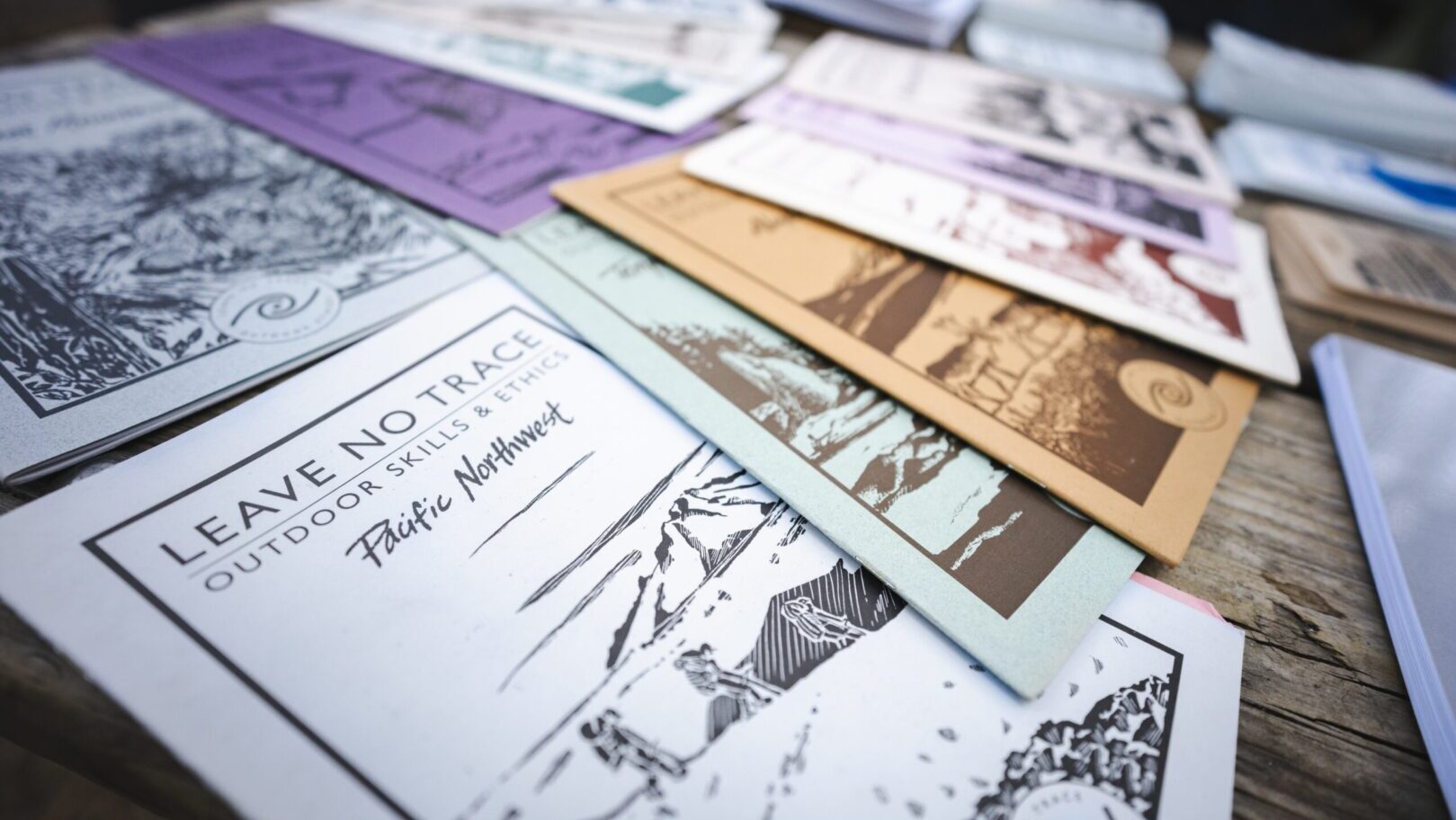
Leave No Trace handouts are given out by Yosemite Conservancy naturalists at select programs. Photo courtesy of Miya Tsudome.
1. Plan Ahead & Prepare
Before you leave for Yosemite, make a plan — the park and your future self will thank you!
Yosemite is a beautiful, but potentially crowded and hazardous destination. Without a strong plan, you could be stuck circling for parking, desperate for water halfway through a hike, caught in a rainstorm without a rain jacket, getting injured or lost, or accidentally trampling wildlife, or worse.
Protect yourself and the park by taking time before your trip to plan your routes (and backup plans!), download/print park maps, and research the slowest times of year to visit, safety tips, seasonal closures, and current park conditions.
If you plan correctly, you’ll be prepared to make the most of your Yosemite experience — even in the busy summer season. Click here to learn more about Principle #1. Looking for trip inspiration? Check out the NPS Plan Your Visit webpage.
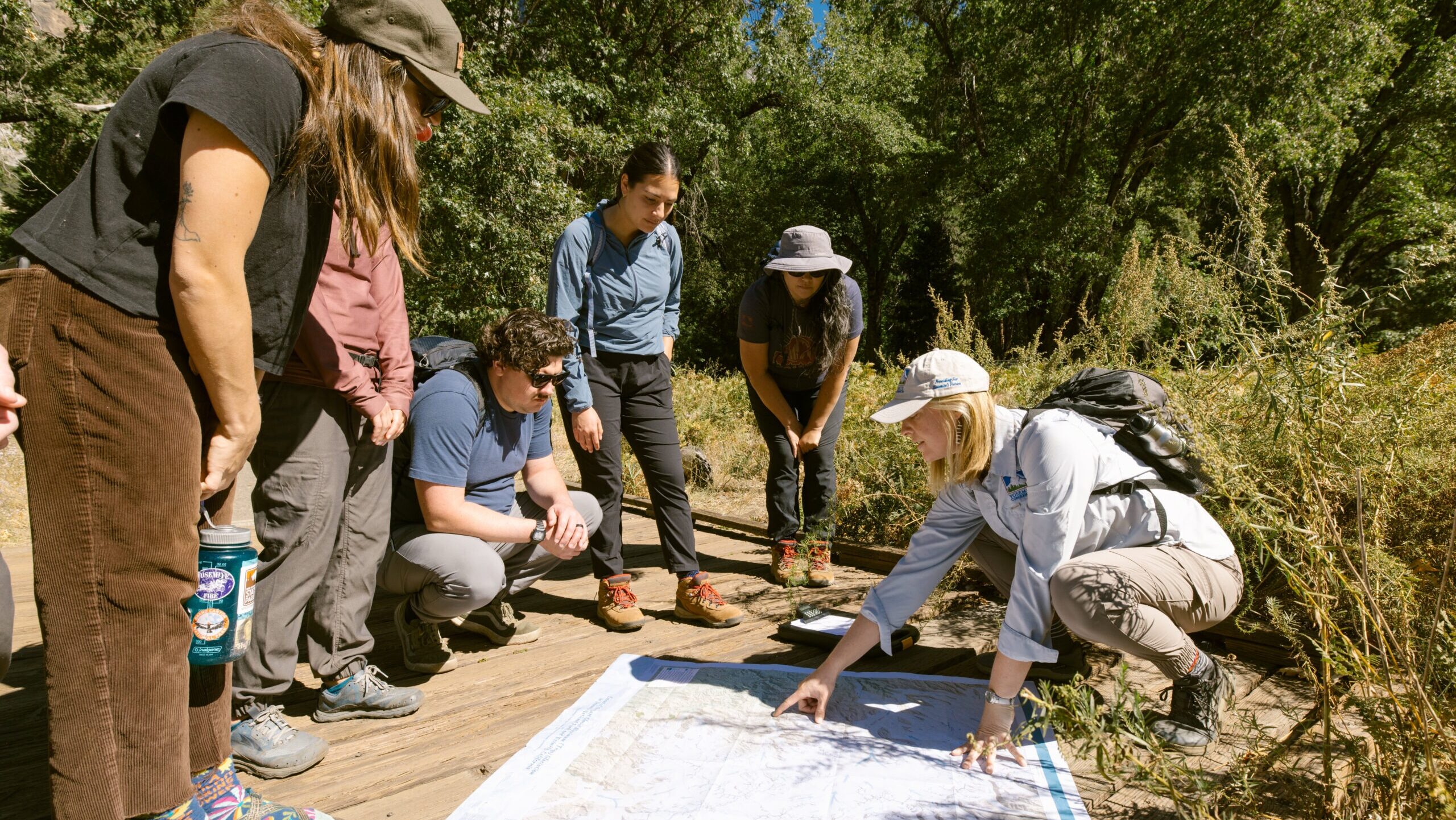
Yosemite Conservancy naturalist showcases how a printed map can be a valuable tool when visiting the park. Photo courtesy of Jenn Emerling.
2. Travel & Camp on Durable Surfaces
Trail systems and roadways in Yosemite are more than just helpful for navigating the park; they also protect wildlife and sensitive habitat from being trampled by feet and tires.
Staying on designated trails and camping in campgrounds or on durable surfaces (with a wilderness permit, of course) are some of the best things you can do for Yosemite’s ecosystems. Cutting between switchbacks can erode soil, stepping into a meadow or setting up a tent in undesignated areas can crush grasses and flowers, and even stepping off trail to avoid mud can speed up erosion.
If you absolutely must step off trail — say a tree has fallen across the path — make sure to try to step only on durable surfaces (i.e., rock, sand, gravel, dry grass, or snow). When camping in the backcountry, familiarize yourself with regulations and always set up camp at least 100 feet from lakes, streams, trails, other campsites, and historic/cultural sites (bonus points if you get even farther away!).
Similar to hiking on non-designated trails, driving on non-designated roadways has a similar environmental impact, though a car is more like a giant hiking off-trail. When parking your car, please only use designated parking spots. Creating a makeshift parking spot by driving off the side of the road onto non-durable surfaces can severely harm habitat (and you could get a citation from a law enforcement officer).
It could take 10-30 years for an ecosystem to recover from irresponsible off-trail hiking, camping, or driving, so stay on durable surfaces and let your legacy be one of preservation, not destruction. Click here to learn more about Principle #2.
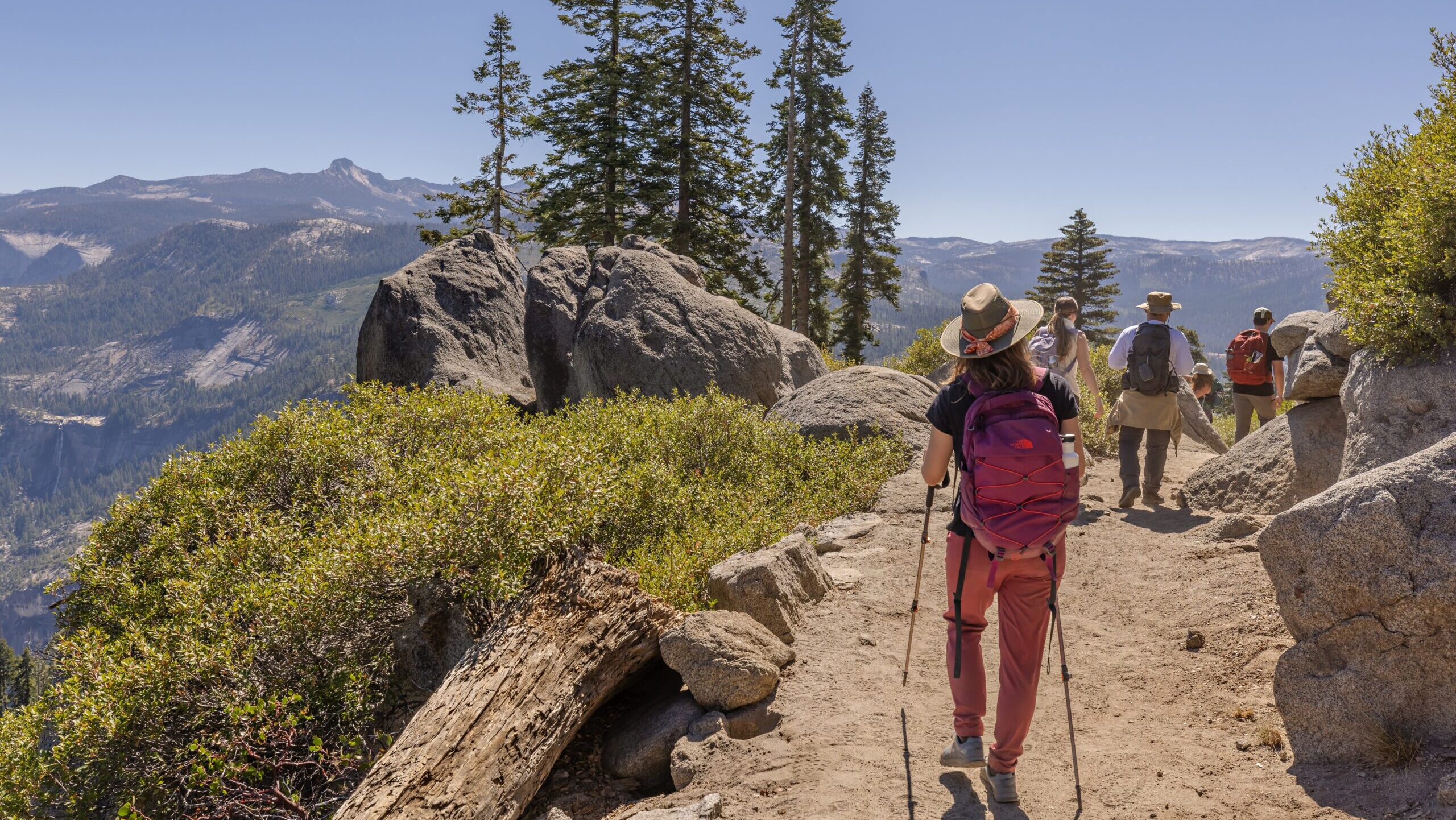
Visitor hikes on an official trail (and it’s a durable surface — packed dirt!). Photo courtesy of Brittany Colt.
3. Dispose of Waste Properly
We all generate waste — the Ziplock bag that holds our sandwich, the apple core eaten halfway up to Half Dome, and, of course, the human waste we create daily.
Any kind of waste can impact Yosemite — the Ziplock bag could get stuck on an unsuspecting squirrel’s head, an apple core can cause local wildlife to become fixated on visitor food, and human waste can pollute ecosystems and contaminate water.
For these reasons, Principle #3 asks that we always dispose of all waste properly. This means putting trash, recycling, and compost in the right receptacles (or packing it out when bins aren’t available). It also asks that when washing yourself or your dishes, you use small amounts of biodegradable soap and scatter dirty water at least 100 feet away from streams or lakes.
When it comes to human waste — and yes, we’re talking poop — your best option is to the deed in a toilet (Check out our Guide to Bathrooms blog to find the nearest toilet).
If you’re backpacking or hiking in the wilderness, we realize there might not always be a toilet nearby when the time comes. For moments without access to a toilet, we recommend watching this informative NPS video on how to poop in the woods (for poop guidance and a good laugh).
Click here to learn more about Principle #3.
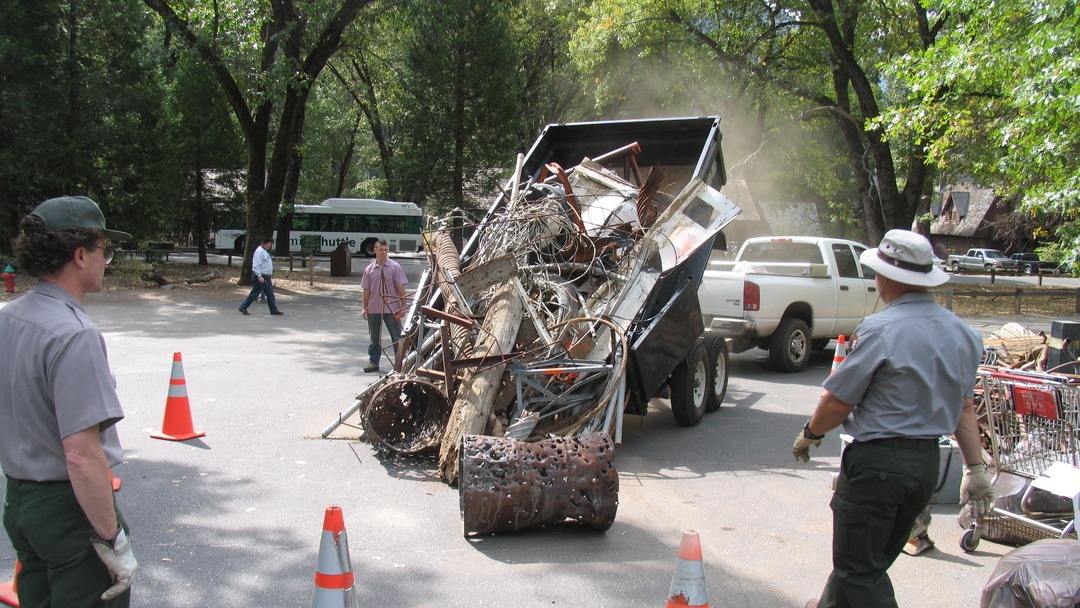
Trash collected during an annual Yosemite Facelift event, where the Yosemite Climbing Association provides volunteers with the opportunity to help clean up waste from across the park.
4. Leave What You Find
Take pictures, not plants. Did you know that it’s illegal to collect plants in national parks without a permit? From an ecological standpoint, picking a wildflower doesn’t just mean plucking a few pretty petals — it can also mean taking away the seeds that would have produced the next year’s blooms.
This idea extends throughout Yosemite — to all natural objects, structures, and historic/cultural artifacts. Leaving items as you found them not only ensures their continued existence but also allows others to experience their wonder as well.
Of course, leaving what you find does not apply to your personal possessions and trash — we are not asking you to leave behind food scraps, belongings, or other traces of your visit. In fact, Principle #4 also asks, if possible, you leave the park even more pristine than you found it.
Our Outdoor Adventure leaders and participants often help pick up trash along the trails. Even if you’re not on an Outdoor Adventure, you can pitch in by carrying a spare bag in the side pocket of your pack to hold any litter you find along the way.
Click here to learn more about Principle #4 or here to join an Outdoor Adventure.
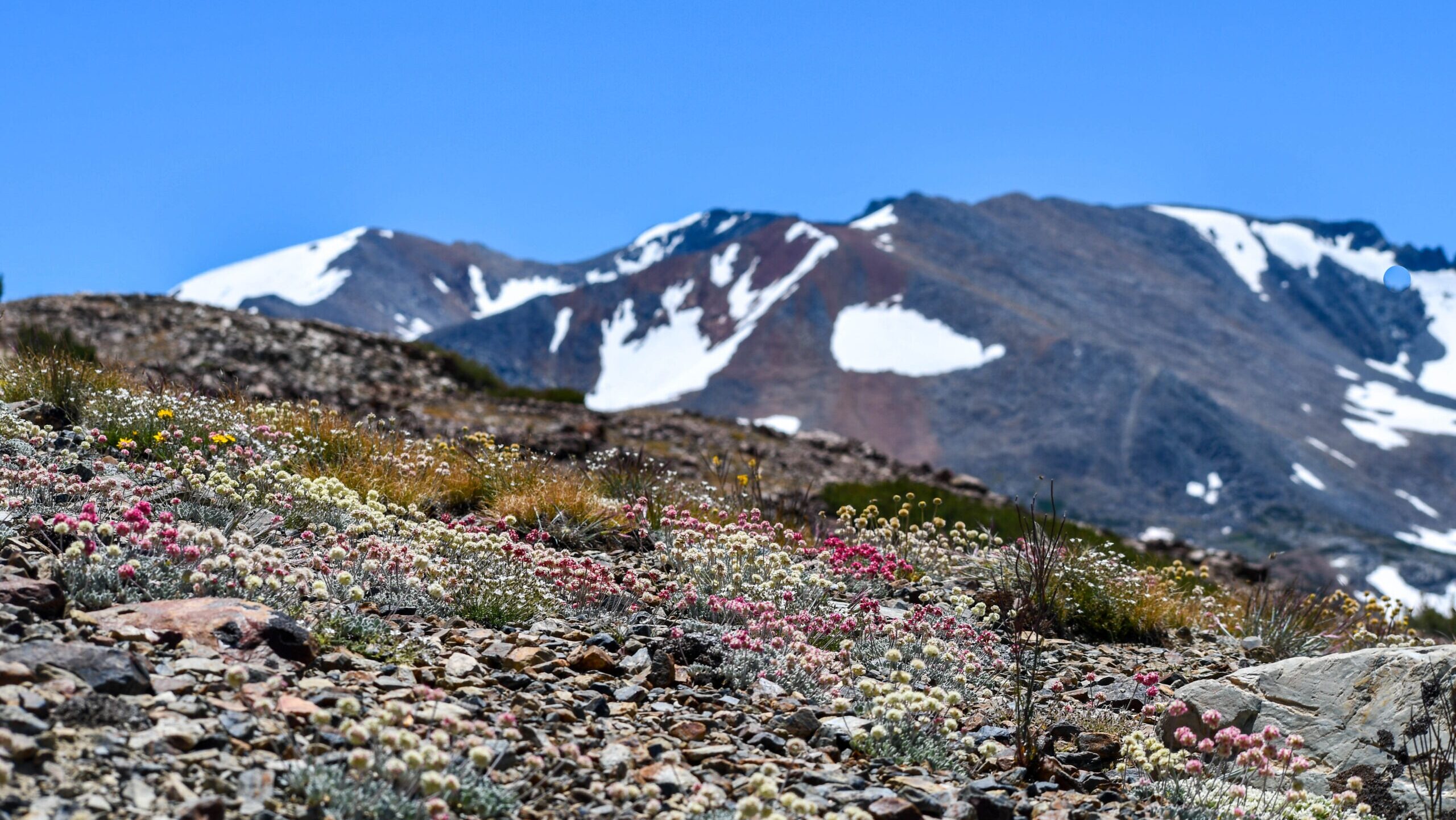
Buckwheat flowers blooming on Mt Gibbs in Yosemite National Park. Photo courtesy of NPS.
5. Minimize Campfire Impacts
Campfires are a quintessential experience of Yosemite for many visitors, but they can also disrupt local habitat and pose a broader risk of wildfires. This is true for campfires in the backcountry AND the campfire ring in your drive-in campground.
At developed/car-accessible campgrounds, use established fire pits and buy firewood locally to prevent the spread of invasive species. In the backcountry, use established fire rings that are at least 100 feet from water or, better yet, consider swapping out your campfire for a lightweight stove for cooking and a lantern for light.
No matter where you are, try to keep fires small, only use sticks from the ground that can be broken by hand and fit completely inside the fire ring, put out campfires completely (see more below), and ALWAYS follow all seasonal fire restrictions.
Campfires CAN lead to wildfires and if we start a campfire, it’s up to us to put it out completely, and the easiest way to do so is to drown, stir, feel!
Drown: Start by pouring water all over your campfire. Water is necessary for putting out a campfire, and it’s a common misconception that water will “ruin a fire ring” for the next person — it’s actually the only failsafe way to put out a campfire.
Stir: Next, spread out the remaining coals — coals can retain heat for hours, and flare up if the wind starts gusting.
Feel: Lastly, hover your hand over the coals — if you can feel heat without touching, they’re still too hot. Repeat the drown, stir, feel proses until your firepit is cool to the touch. Only at this point is it safe to leave your fire unattended and/or go to sleep.
Click here to learn more about Principle #5.
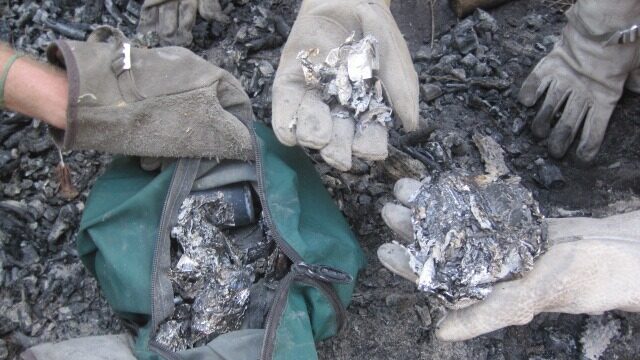
Wilderness Restoration crew members hold some of the trash pulled out of an illegal fire ring in the Grand Canyon of Tuolumne. Photo courtesy of the NPS.
6. Respect Bears & Other Wildlife
Animals are part of what makes Yosemite magical — a bear sighting from across Tuolumne Meadows, a chorus of bird songs in the early morning, the dance of bats flying above at dusk.
And yet, these wonderful wildlife patterns can quickly be disrupted by human activities. Some are killed by speeding drivers. Others are spooked away from their homes by the whir of a drone or a visitor getting too close. Many get a taste of human food and become dependent on it, which can lead to them to aggressively seek out more human food.
Luckily, all of these impacts can be avoided by respecting wildlife! Never feed wildlife and store food, trash, and toiletries in lockers or bear-resistant canisters. Keep a safe distance from any animals you encounter, no matter how cute or curious they are. Drive cautiously on park roadways. And always keep dogs on leash and in pet-friendly areas of the park.
These simple steps make all the difference in keeping wildlife wild. Learn more specific tips on protecting Yosemite’s black bears and read more about Principle #6.
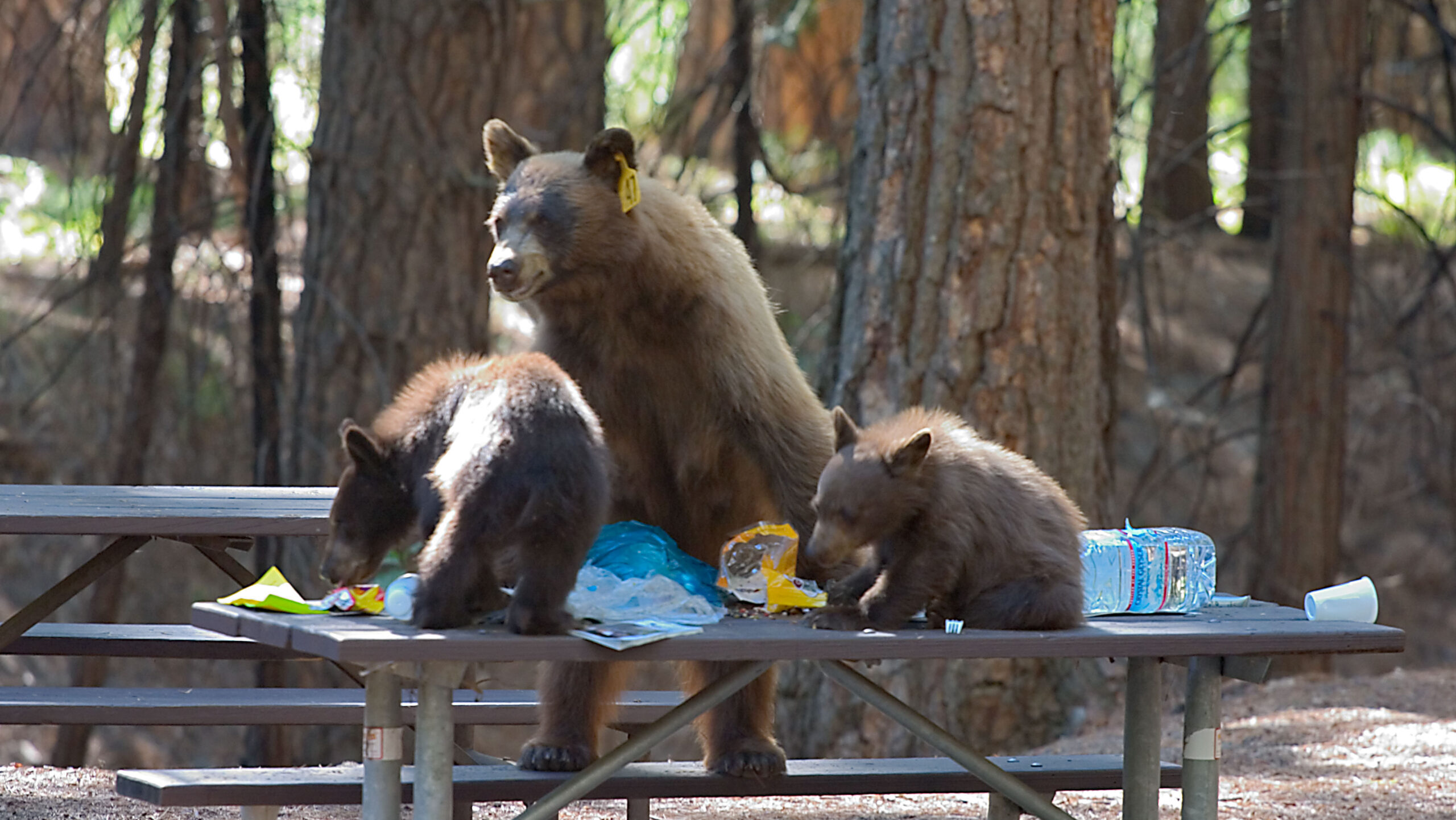
A bear and her cubs snack on unattended food in Yosemite Valley. Photo courtesy of Dan Sparks.
7. Be Considerate of Others
What is the most common animal in Yosemite? People! And just as the LNT principles ask that you respect wildlife, they also ask that you respect the humans you encounter outside. Remember, considering your fellow visitors protects their park experience.
Extending kindness to a fellow visitor can help more people feel welcome in public lands.
Being mindful of noise levels — keeping voices down after quiet campground hours and wearing headphones to avoid music amplification — allows everyone to enjoy Yosemite in their own way. Yielding to others on the trail and stepping onto durable surfaces to let faster hikers pass ensures that we all move at the pace that’s best for our own bodies.
In the busy summer months, we find it helpful to remember that everyone is going through the same chaos — the same entrance lines, the same hunt for parking spots, the same crowded hike. Remembering this can make it easier to extend grace.
Learn more about Principle #7 and the best ways to care for your fellow visitor here.
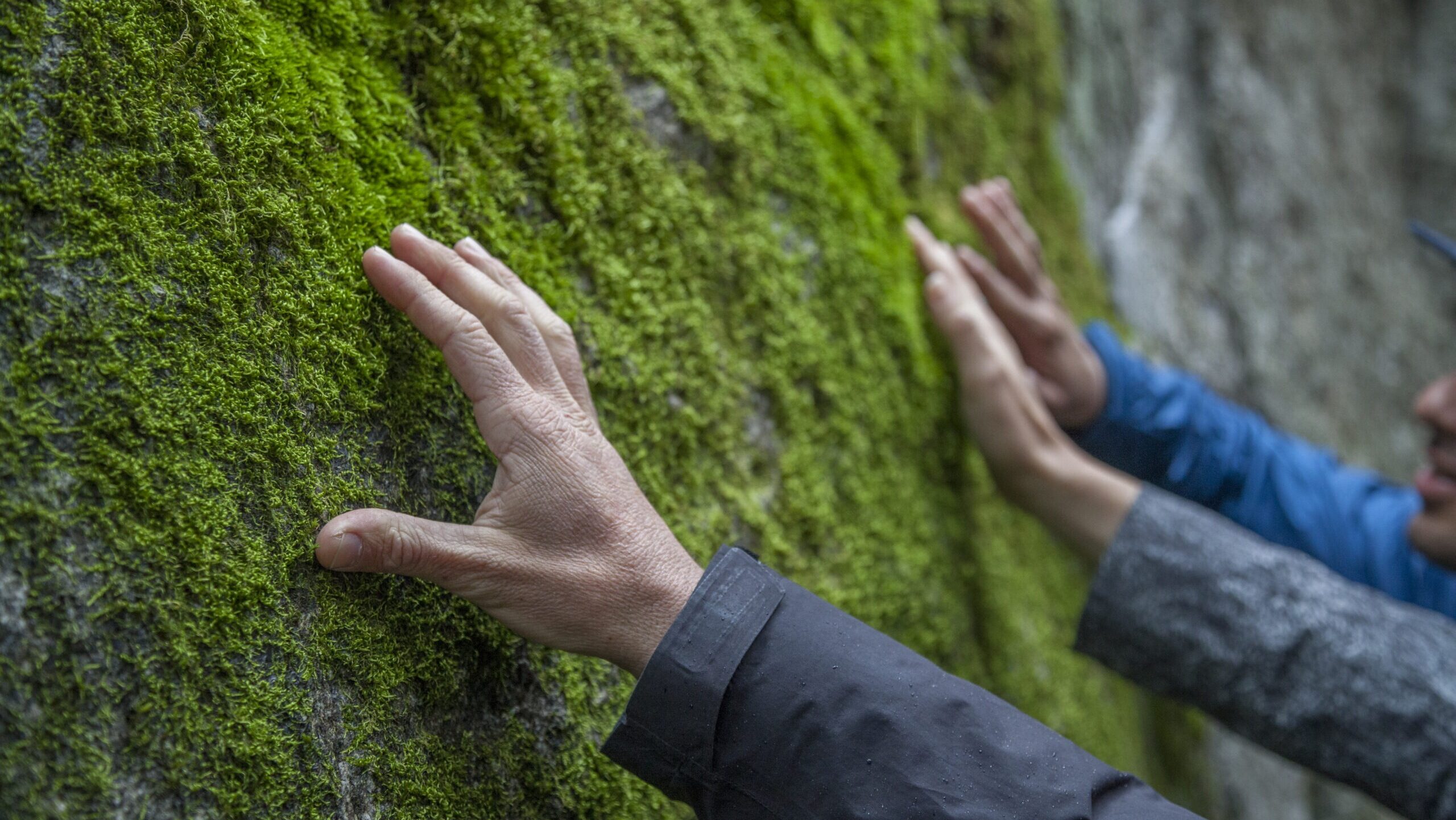
Visitors explore the area around Lower Yosemite Fall with a Yosemite Conservancy naturalist guide. Photo courtesy of Keith Walklet/Yosemite Conservancy.
Leave No Trace in Yosemite
Whether you’re planning your first visit to Yosemite or your fifty-first, it’s always important to practice your LNT skills. This goes beyond the park as well. As the LNT Center for Outdoor Ethics puts it, “The Principles can be applied anywhere — from remote wilderness areas to local parks, and even in your backyard.”
Want to learn more? Join us for an Outdoor Adventure in Yosemite, and/or check out additional trail tips and backpacking basics. See you outside soon!