Yosemite National Park welcomes approximately 4 million visitors each year, and many have the same question while planning: “What are the best times to visit Yosemite?”
Now the truth is — and yes, we’re a little biased — to experience the park’s beauty and magic, the best times to visit Yosemite are any time. BUT if you’re worried about crowds, weather, and road closures, some seasons are definitely better than others.
In this blog, we’ll lay out what the different seasons in Yosemite offer, including recreation opportunities, wildlife sightings, programs, crowds, and so much more! Keep reading to learn about each season, or click here to skip to the season of your choice: Spring, Summer, Fall, Winter.
If you’re interested in camping, check out our campsite blog. If you really want to know where the nearest restroom is, take a look at our bathroom blog. And if you want to learn everything you need to know before visiting, we suggest our Know Before You Go blog.
Spring (mid-March to mid-June)
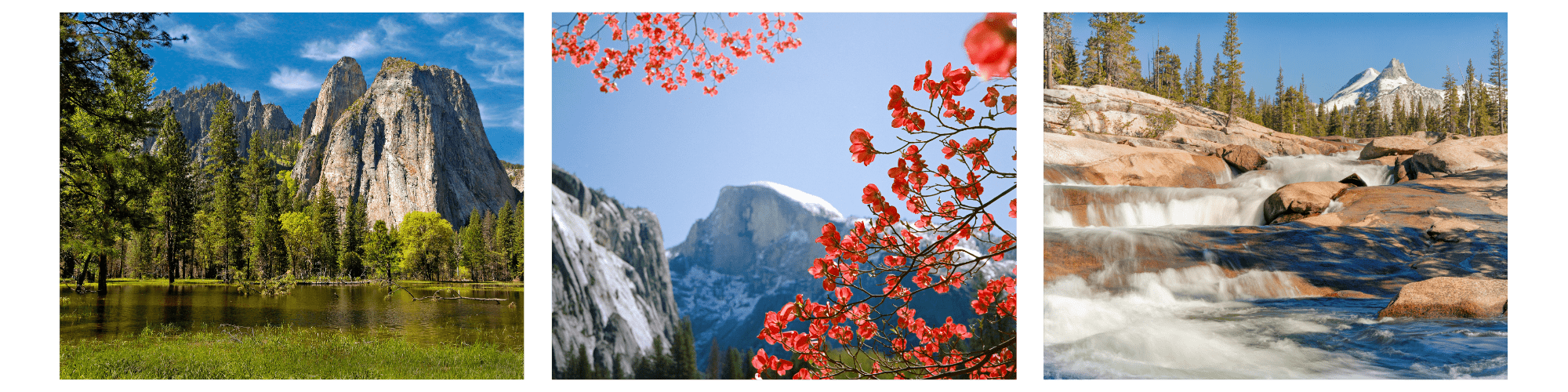
Spring in Yosemite arrives slowly and unevenly, beginning in the Valley and climbing higher with each passing week. As snowmelt gathers momentum, waterfalls surge to life and meadows begin to green at lower elevations, while winter still lingers in the high country.
Recreation:
- Waterfalls surge as snow melts, often reaching peak flow sometime between May and June. During big snow years, look for an abundance of ephemeral waterfalls around Yosemite Valley and in the river canyons. If you’re looking for classic, thundering waterfall views, this might be one of the best times for you to visit Yosemite.
- Hiking is at its peak for lower-elevation trails at Hetch Hetchy or Yosemite Valley, with early spring wildflowers and great waterfall views. Trails at higher elevations may still be covered by snow, creek levels could be high, and/or trails might not be available in early spring due to seasonal closures (includes the Mist Trail and Four-Mile Trail). Look for trail reports and ask rangers for advice before embarking on higher elevation hikes.
- In spring, look for a variety of programs from the National Park Service (NPS) and park partners in the Yosemite Guide, and beginning in mid-March, look for Conservancy naturalist-led Birding, Birding and Wildlife Walks, Sunset Walks, and Stargazing programs. The Happy Isles Art and Nature Center opens for the season in April. This family-friendly destination near the Mist Trail offers daily art classes and drop-in activities.
- The Half Dome cables are normally up the Friday before the last Monday in May (Memorial Day), conditions permitting. A permit is required to ascend the Half Dome cables when the cables are up.
Wildlife:
- Early bear activity may be seen as animals emerge to forage. Remember to do your part to keep bears wild by always storing your food, driving the speed limit, and maintaining a safe distance!
- Sweet tweet! Many bird species begin mating and courtship in the spring. Listen for an abundance of birdsong at dawn and dusk.
Weather:
- Mild daytime temperatures in Yosemite Valley, with cool to cold nights.
- Spring storms are common, bringing rain at lower elevations and snow higher up.
- Conditions vary considerably from year to year and day to day — you’ll likely encounter snow, ice, and/or flooding on trails.
Crowding & Reservations:
- Visitor numbers are generally moderate, increasing as snow melts and summer approaches.
- Spring break season brings an abundance of families and young adults to the park.
- Depending on the year, entrance reservations may be needed in late May and June. Check the NPS website to see if you currently need a reservation.
Road Closures:
- High-elevation roads, including Tioga Road and Glacier Point Road, are typically closed.
Conservancy Tip: If you’re hiking the Mist Trail in late spring or early summer, be sure to bring grippy shoes and waterproof gear — you’ll likely get soaked by waterfall mist!

Summer (mid-June to August)
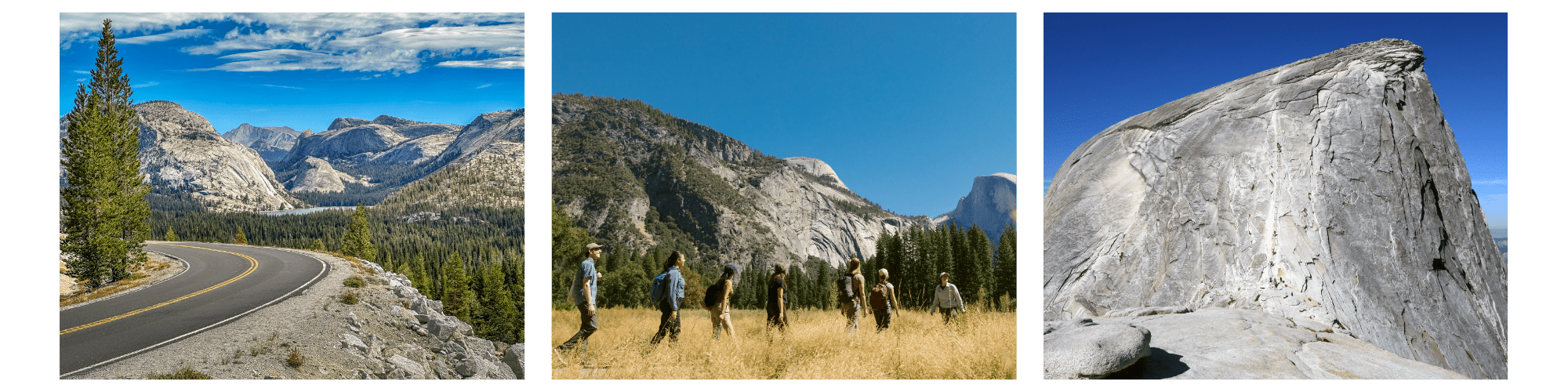
Mid-June signals the start of Yosemite’s summer season, open trails, ideal backpacking conditions, and of course, peak visitation numbers. Roads to higher elevations begin to open, alpine landscapes are easier to access, and long daylight hours invite exploration throughout the park.
Recreation:
- Warm weather and long days bring about ideal conditions for outdoor activities — from backpacking and camping to climbing and hiking. Permits are required year-round for backpacking in the park. Learn more at the Conservancy’s Wilderness Hub.
- As snow melts from Tuolumne Meadows, alpine trails offer scenic views of the High Sierra, and the Parsons Memorial Lodge presents a summer speaker series.
- Water-based activities, such as rafting or swimming in the Merced River, are best this time of year. Remember to be safe in water — water-related accidents are the second most common cause of death in Yosemite.
- The seasonal shuttle at the Mariposa Grove transports visitors from the Mariposa Grove Depot to the grove entrance.
- The NPS, park partners, and Yosemite Conservancy offer a wide range of programs throughout the summer season. Park information stations and the Yosemite Guide are the best places to find current listings of in-park programming during your visit.
Wildlife:
- Birds, deer, and other mammals are widely visible in meadows and forests.
- Look for marmots sunbathing on large granite slabs in Tuolumne Meadows and the High Sierra.
- Monarch butterflies can be spotted in meadows near milkweed plants.
- Remember to give wildlife room, use your zoom for any wildlife photography, and never approach or feed wildlife.
Weather:
- Warm to hot days in Yosemite Valley, particularly in July and August. Cooler temperatures at higher elevations.
- Mostly dry and sunny conditions, with occasional afternoon thunderstorms in the high country. Packing a rain shell or other waterproof gear could save you from a soggy journey.
Crowding & Reservations:
- Summer IS the busy season in Yosemite — expect long entrance lines, crowded trails, and limited parking. Perhaps it’s because its one of the best times to visit Yosemite, or perhaps because it’s easier to travel. Either way, please help us protect Yosemite and always park in designated spots (violators may be towed and/or cited).
- Visit during the week instead of on weekends. Delays and congestion are possible on any day, but are noticeably worse on Saturdays, Sundays, and holiday weekends.
- Consider alternate forms of transportation! Visitors can ride a YARTS bus to enter the park, take free in-park shuttles to get around Yosemite Valley, and/or rent a free bike to experience the Valley in a whole new way.
- Bring plenty of food and water for potential delays, and remember to stop and use restrooms when they are available. You can find a map of all the bathrooms in Yosemite Valley in our Guide to Bathrooms blog.
- Enjoy the entire Yosemite region. Consider visiting gateway communities and their visitor centers in Mariposa, Groveland, Mono County, and Oakhurst.
- Depending on the year, entrance reservations may be needed. Check the NPS website to see if you currently need a reservation.
Road Closures:
- A majority of the park’s roads are open, including Tioga Road and Glacier Point Road, which typically open fully by late June.
- Please be prepared for crowded parking lots at key destinations such as Tunnel View, Glacier Point, and Yosemite Valley.
Conservancy Tip: Avoid crowds by joining one of our art programs, naturalist-led walks, backpacking and hiking trips, or custom adventures!
Fall (September to mid-November)
As summer crowds taper off, Yosemite settles into a calmer rhythm. Days remain warm, nights grow crisp, and the park takes on a quieter, more contemplative feel. While seasonal changes unfold, autumn offers space to continue hiking, while slowing down to take in the landscape.
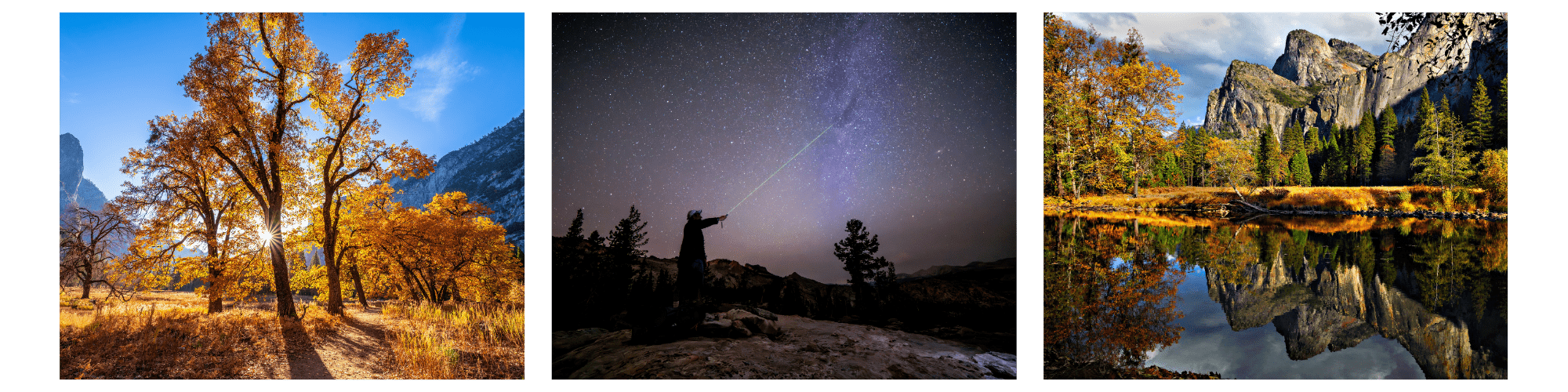
Recreation:
- Early Fall is the time to get the last high country hikes in for the season before road closures make trail access more difficult.
- The park’s trees come to life with color, with brilliant yellow, oranges, and reds appearing along rivers and meadows.
- Autumn nights often bring clear skies and the perfect opportunity for stargazing. Join a Conservancy naturalist on a guided stargazing program and experience the magic of the park’s night skies.
- If you’re planning to backpack, remember that overnight parking is prohibited on the Tioga Road (from Tuolumne Grove to Tioga Pass) and Glacier Point Road starting October 15. Plan accordingly!
- The Half Dome cables normally come down the day after the second Monday in October, conditions permitting. A permit is required to ascend the Half Dome cables when the cables are up.
- Conservancy art classes and retreats continue through September and October until the Happy Isles Art and Nature Center closes for the season at the end of October.
Wildlife:
- Hangry? Try being a Yosemite bear. Every fall, bears enter a period called hyperphagia. During this time, bears work hard to eat around 20,000 calories a day, and will happily eat human food if it’s easily accessible. Please be sure to store your food properly and keep your bags within arm’s reach at all times.
- Oh deer! Mule deer rut every fall, meaning that the velvet falls off the antlers that male deer have been growing all spring and summer. At this time, they also begin to look for a mate and can become aggressive towards visitors. Please give the mule deer extra space throughout the season.
Weather:
- Mild, sunny days and cool nights.
- Crisp mornings, especially at higher elevations.
- Increasing chance of storms or early snowfall by October.
Crowding & Reservations:
- Visitor numbers drop noticeably after Labor Day. Some consider this one of the best times to visit Yosemite for this reason alone!
- Depending on the year, entrance reservations may be needed in early September. Check the NPS website to see if you currently need a reservation.
Road Closures:
- Tioga Road and Glacier Point Road close after major snowstorms. The roads occasionally open again after early storms, but once enough snow accumulates, they’ll close for the season. Always check the park’s website or road hotline for the current road information: 209-372-0200, then press 1,1.
Conservancy Tip: For the best fall foliage experience, visit meadows or riverside groves during early morning or late afternoon, when low-angle sunlight illuminates golden leaves and casts reflections in the water. One of our favorite spots for leaf spotting is near Swinging Bridge along the Merced River.

Winter (mid-November to mid-March)
Winter transforms Yosemite into a landscape of snow and silence. With fewer visitors and a slower pace, the park offers a rare sense of stillness — from snow-dusted granite walls to frost-lined meadows. Though access is limited in places, winter invites a different kind of connection, shaped by patience, preparation, and quiet wonder.
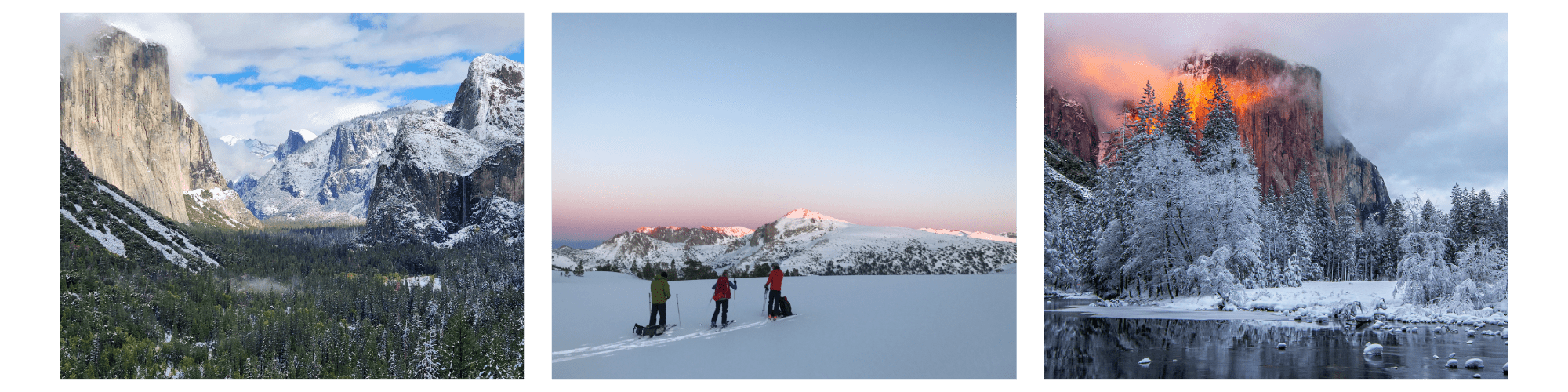
Recreation:
- Most trails in Yosemite Valley are clear enough for hiking in winter (with proper footwear and occasionally crampons). Regardless, be sure to check in with park rangers at the Welcome Center for trail conditions.
- Cross-country skiing and snowshoeing are some of the best ways to get around snow-covered trails. Rentals are available at the Nordic Center at Badger Pass Ski Area (where you can also, of course, go downhill skiing).
- Look for beautiful frost patterns and frazil ice around Yosemite Falls in the winter months.
- NPS staff provide ranger talks and snowshoe walks during the winter months. Check out the Yosemite Guide or an information station in the park for the current offerings.
- There are plenty of ways to enjoy the park winter, which could make this season one of the best times to visit Yosemite for you. Learn more from our Winter in Yosemite blog and our five tips for making your Yosemite winter magical.
Wildlife:
- Most wildlife quiets down in the winter months. Ravens, Steller’s jays, and grey squirrels remain active and are easily spotted in the winter.
- Coyotes can be spotted occasionally hunting in snow-covered meadows for small mammals in the subnivean layer (the hollow space between the ground and the base of the snowpack).
Weather:
- Winter is often cold and wet. Prepare for snowy and rainy conditions in the park. While Yosemite Valley may not always be snowy, you will encounter snow in the higher elevation areas of the park.
- Although many roads remain open, tire chains are often required. You should plan on carrying tire chains from November through April. For current road conditions, call the park’s hotline at 209-372-0200 (press 1,1).
- Be sure to check the NPS current conditions page before setting out on a trip.
Crowding & Reservations:
- Winter is typically the slowest time for visitation in Yosemite, but keep in mind that the park may be very busy during winter holidays and the few weeks in February when the Horsetail Fall event is predicted to occur.
- Depending on the year, entrance reservations may be needed for the ‘Firefall’/Horsetail Fall event in February.
Road Closures:
- Many roads remain open in winter thanks to crews that frequently plow.
- Tioga Road closes for the winter, and vehicles are not permitted between Tuolumne Grove and Tioga Pass.
- Glacier Point Road also closes in winter, though the first five miles open to Badger Pass Ski area, typically from mid-December through March or early April. It is not possible to drive to Glacier Point in the winter.
Conservancy Tip: With higher elevation roads closed, winter is the perfect time to explore Yosemite Village. Get oriented at the Welcome Center, admire art in the Ansel Adams Gallery, learn about science in the park at the Exploration Center, experience Tribal art at the Yosemite Museum, and so much more!

So what are the best times to visit Yosemite?
The answer is really up to you, because no matter the season, Yosemite offers something extraordinary — from roaring waterfalls to quiet snowfall. The best times to visit Yosemite are when you have time to travel! Just remember that checking current conditions and planning ahead for crowds will help you make the most of your time in the park.
When you visit Yosemite, remember that being a respectful visitor is part of the park experience. We ask that you review and uphold the Leave No Trace principles, which include staying on trail, packing out trash, and not disturbing wildlife. These simple actions help protect the parks’ ecosystems so that everyone can enjoy them for seasons to come!
No matter the season, we hope to see you out there!
Photo Credits (left to right)
Blog header image: Panorama Trail View © John Milam.
Spring header images: Cathedral Rocks in spring © Charles A. Cagara; Half Dome in early spring © Blake Johnston; Spring runoff in high country © Blake Johnston.
Summer header images: Tioga Road summer drive © Stephanie L. Grace; Conservancy naturalist walk © Jenn Emerling; Half Dome cables © Glen Young.
Fall header images: Cook’s Meadow in autumn © Dan Kurtzman Photography; Conservancy stargazing program © Jacob Myhre; Autumn color in the Valley © Charles A. Cagara.
Winter header images: Tunnel View in winter © Eve Priestly; Sunset in the remote northern high country © Ryan Kelly; Winter light over El Capitan © Charles A. Cagara.