by Lauren Hauptman
It can be hard to find a fisher in Yosemite. It’s even harder to find a red fox. But both the fisher and the Sierra Nevada red fox (SNRF) call Yosemite home. Meso- or midsize carnivores, both species are elusive, beautiful, and federally endangered.
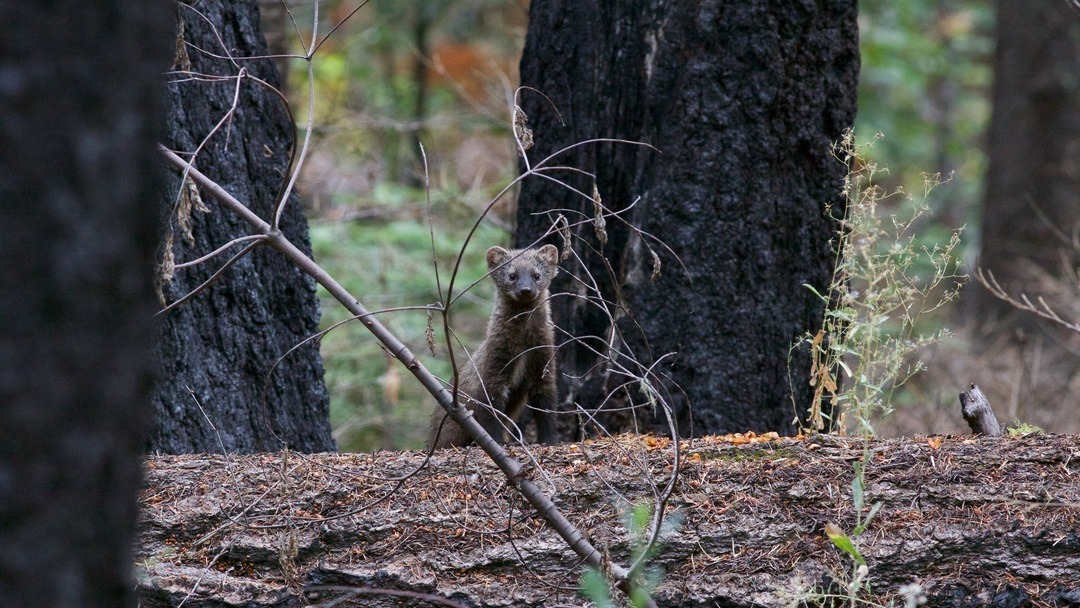
One of four rescued Pacific fisher kits released north of the Merced River in Yosemite circa 2015. Photo courtesy of NPS.
In Search of Sierra Nevada Red Foxes
The first SNRF spotted in Yosemite in nearly a century was seen on camera in 2014. A sub-species of red fox — which is widespread in North America — Yosemite’s red foxes are especially adapted to their high-alpine environments; they populate the crest starting at around 9,500 feet.
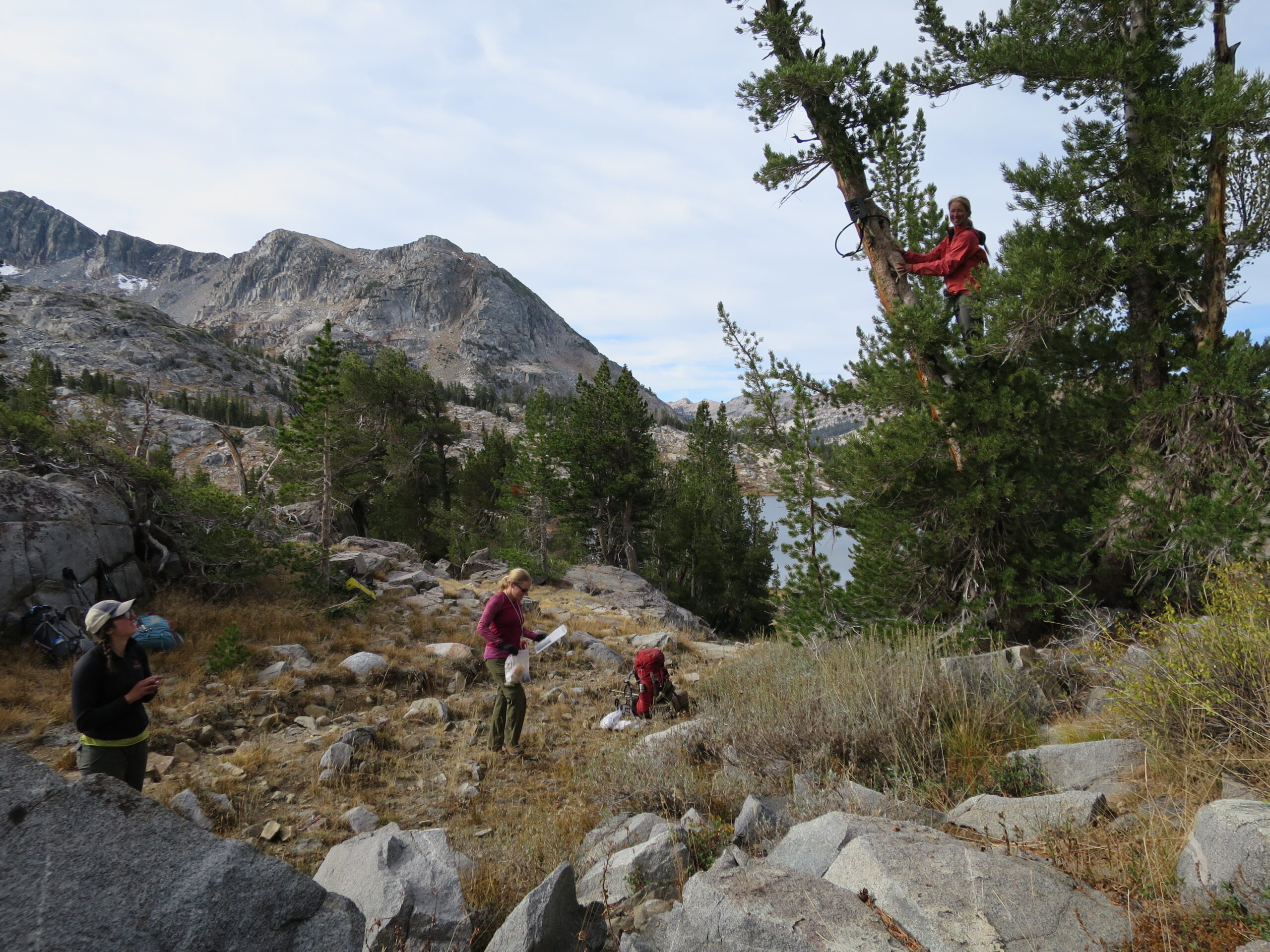
A field crew conducting surveys for the SNRF research project in 2015. While in the field, they installed cameras and hair snare stations. Photo courtesy of NPS.
Not much is known about the 50 or fewer foxes who live in the Sierra Nevada mountains, but Conservancy-funded research is gathering information about the distribution and habitat use of these animals.
National Park Service scientists started the SNRF project with 50 cameras and bait in the form of chicken. Just over a decade later, they now use fewer cameras targeted at select locations that the foxes tend to use, and bait has been upscaled to a scent lure called “Gusto,” which smells like skunk. Carnivores use scent to communicate with each other, so the hope is the skunk scent will attract the foxes.
Researchers are relying on the cameras and scat collection to teach us more about the foxes’ “secret” lives — where they go and what they do, as well as what they eat and how they traverse the landscape.
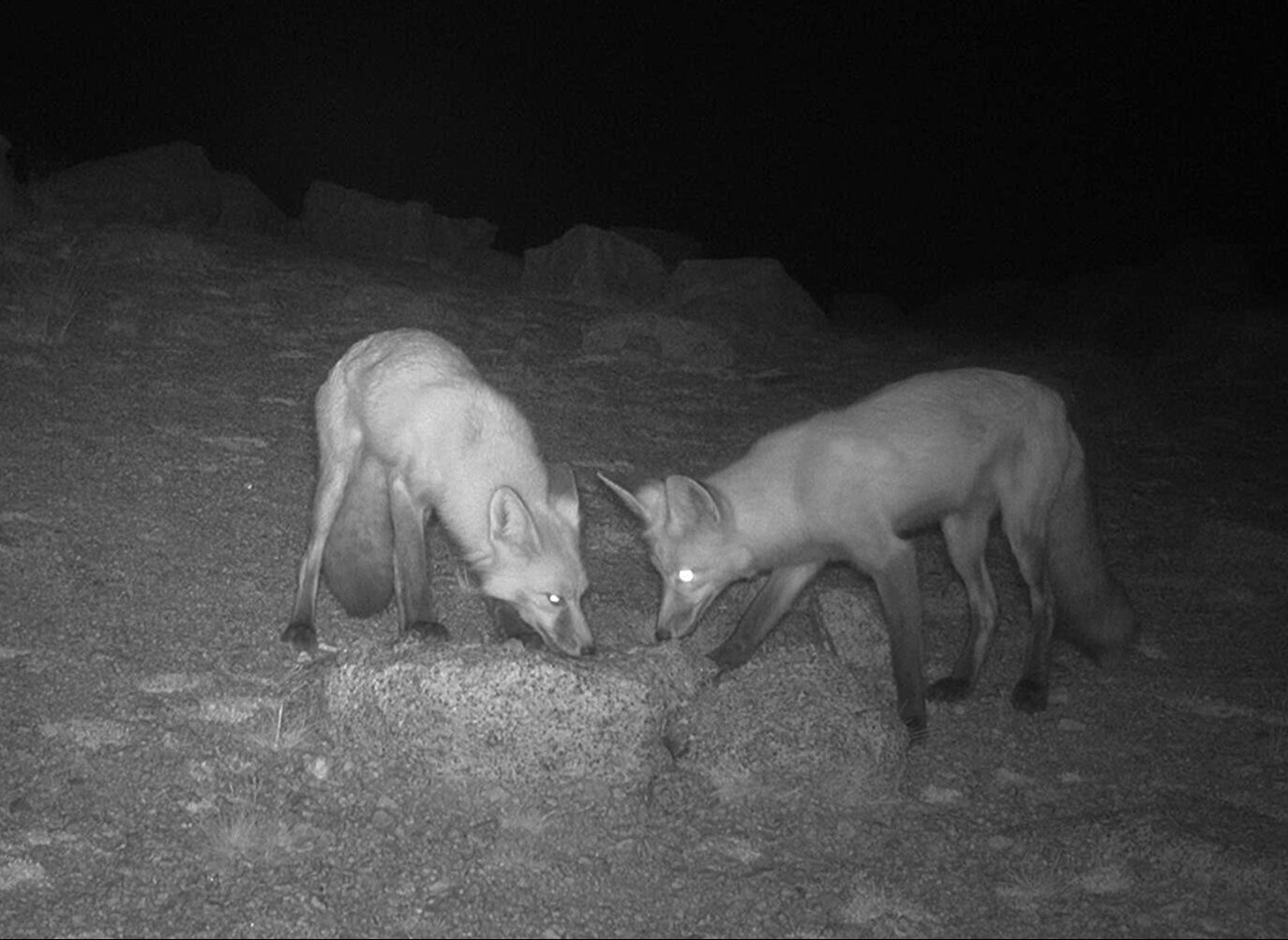
Rare photo of two Sierra Nevada red foxes in the same frame, collected in 2025 from a remote camera in Yosemite. This is the first time two SNRFs have been detected together in the Sierra Nevada. Photo courtesy of NPS.
In fact, 2025 was a record setting year!
Twenty trail cameras documented a record number of foxes on 103 occasions. And, for the first time in the history of SNRF surveys in the southern Sierra Nevada, two foxes were detected together by a remote camera in Yosemite National Park. Not only is this a first, it also suggests that the area may be supporting a breeding pair.
“The Sierra Nevada red fox really represents wilderness and wild places,” says Yosemite wildlife biologist Andria Townsend. “They need these protected wilderness areas to survive. They’re a flagship species for Yosemite’s high country and the spirit of wild places.”
Seeking Pacific Fishers
Considered a mid-elevation species, Pacific fishers are “forest obligates” — species dependent on old-growth forests — found mostly on the western slope of the Sierra at 3,000 to 8,000 feet.
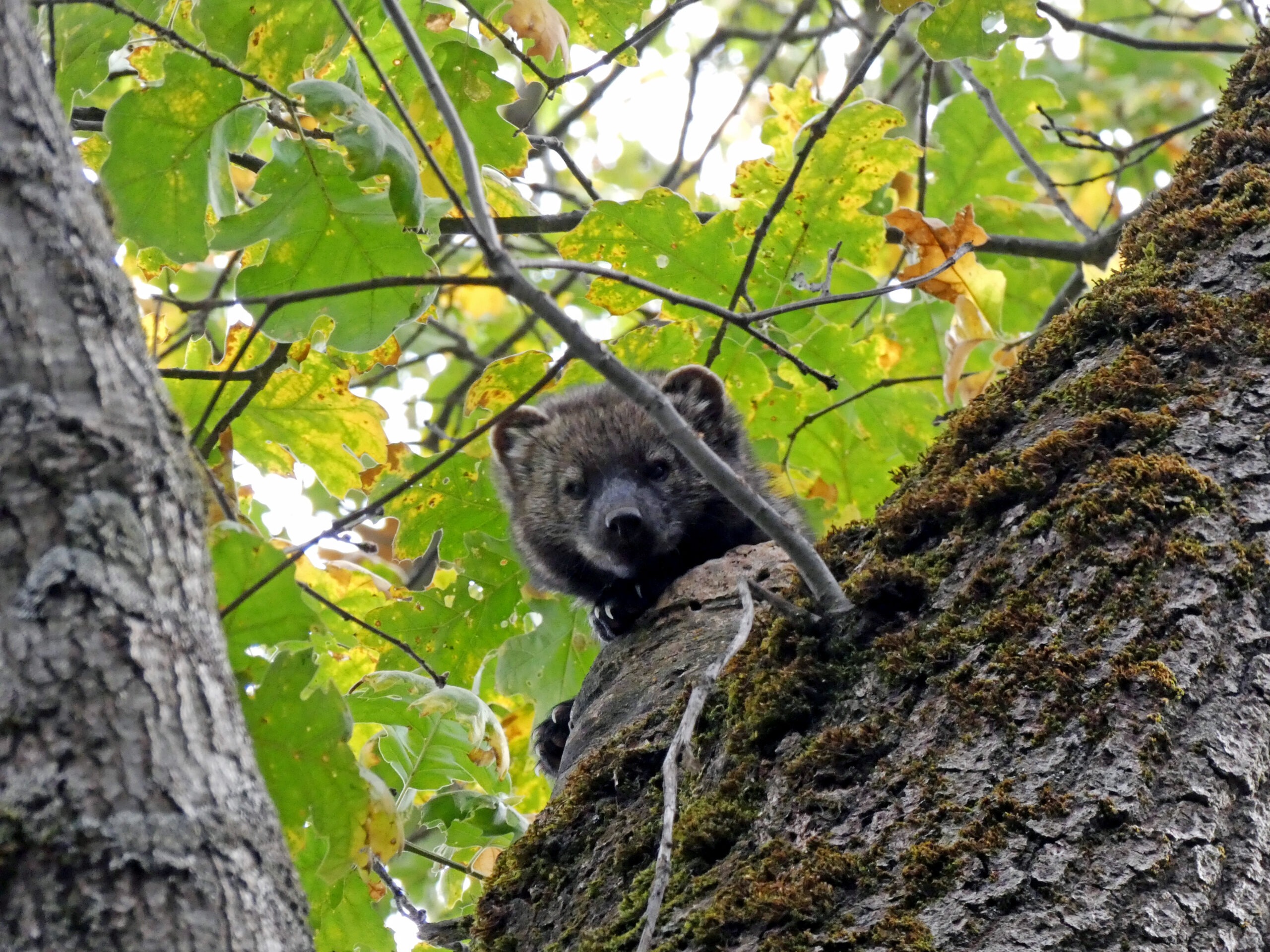
Pacific fisher perched in an oak tree. Photo courtesy of NPS.
They rely on woody debris and cavities in trees, as well as high canopy cover, for their homes and resting places. While fishers move around on the ground, they are also excellent climbers.
Yosemite is at the northern end of their range in the southern Sierra Nevada, which runs from the Tuolumne River down to the Kern River. There was once a contiguous population of fishers through the entire Sierra, but even before European colonization in America, separation started to occur.
Now federally endangered in the southern Sierra, Yosemite’s Pacific fisher population is genetically isolated from others in California.
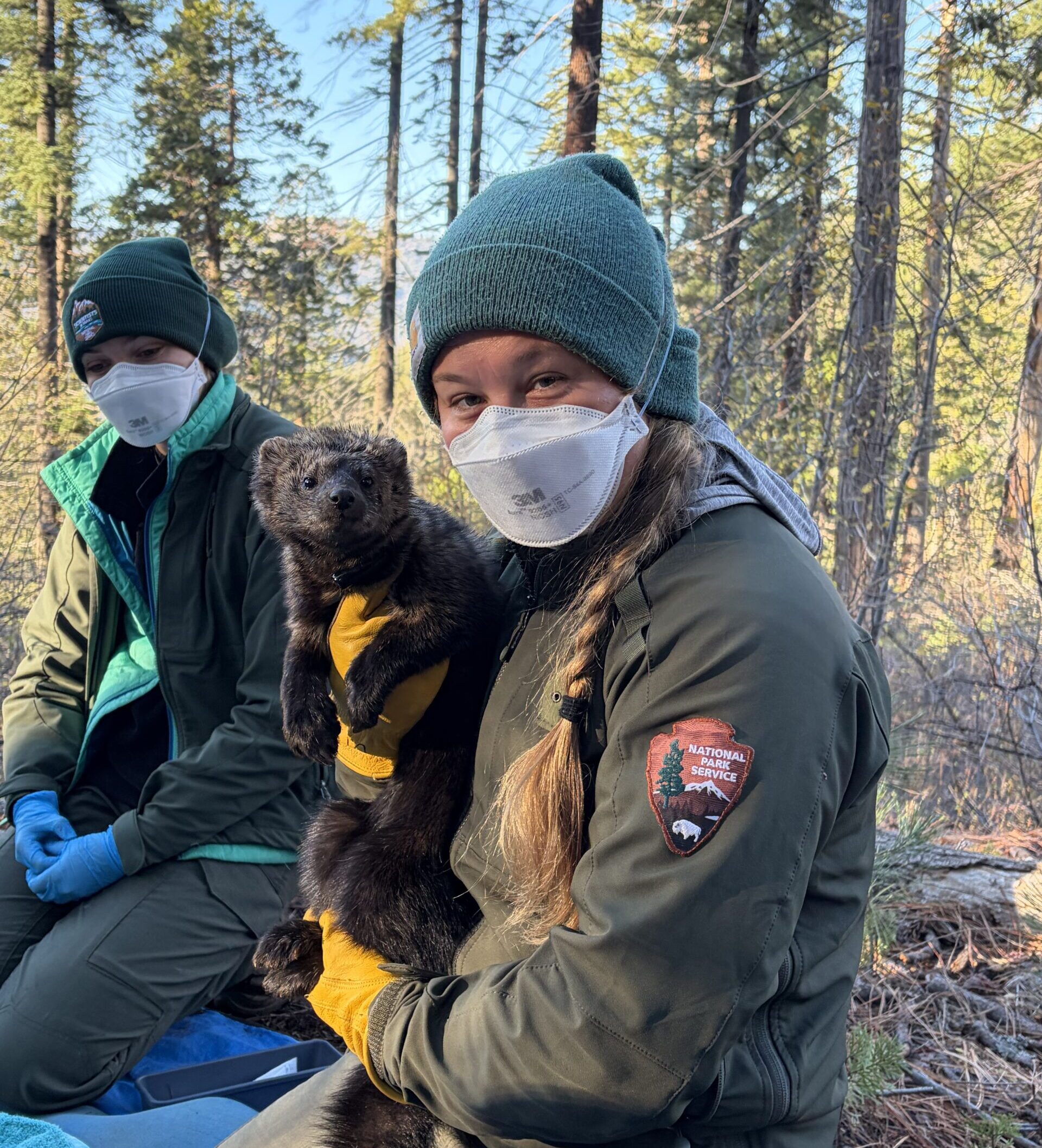
Townsend holds an adult fisher that is wearing a newly fitted GPS collar and recovering from from anesthesia. Photo courtesy of NPS.
It is not currently known how many fishers call the park home, but a Conservancy donor–funded project is attempting to collar the animals to track them as they establish territories, navigate through fire-riddled landscapes, and select microsite features important to their survival.
Recent findings have been tracking a northward expansion following the 2012–2015 drought and subsequent tree die-off that caused fishers to lose nearly 50% of their suitable habitat in the southern Sierra Nevada.
Hope is not lost, however, and both 2024 and 2025 were banner years for locating fisher den trees!
In fact, 2025 was the project’s most successful denning season to date in the history of Pacific fisher research in Yosemite. Not only did the team discover 15 fisher dens in Yosemite, but they also also observed the first fisher den north of the Merced in nearly a century. This new information contributes significant guidance to park management decisions.
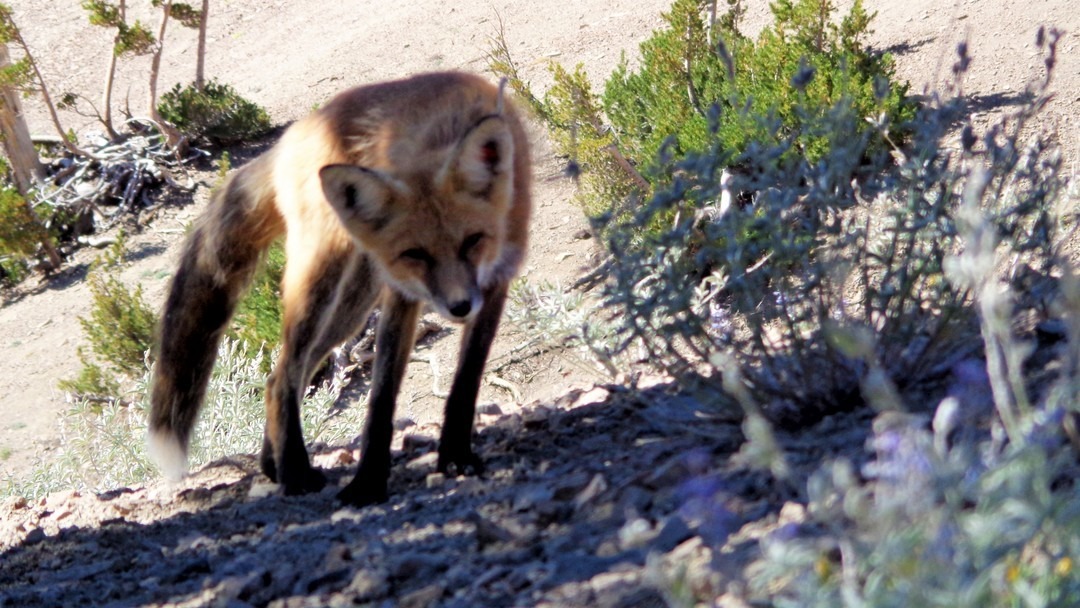
A Sierra Nevada red fox wearing a transmitter, spotted near Leavitt Lake, just north of Yosemite. Photo courtesy of NPS.
“National parks exist for conservation, and wilderness protections are huge for both these rare species,” Townsend says. “Being in a national park and having a resources management and science division that’s dedicated to researching and conserving these animals doesn’t happen everywhere else. We wouldn’t know the things we know about fishers and foxes here without this work.”