Home of Yosemite’s Heritage
The Yosemite Museum, the first structure built as a museum in the entire national park system, celebrates a century of historical preservation and visitor connections in 2026.
Built as part of a grand vision with a noble purpose, the Yosemite Museum’s mission is more relevant than ever: to conserve Yosemite’s history and inspire Yosemite’s future.
In the 1920s, a large donation of Native basketry convinced park officials of the need for a new museum building to house and protect their growing collection of historical objects. And so, the Yosemite Museum Association — now Yosemite Conservancy — was established in 1923 as the first nonprofit cooperating partner in the National Park Service to build the Yosemite Museum with funds from the Laura Spelman Rockefeller Memorial.
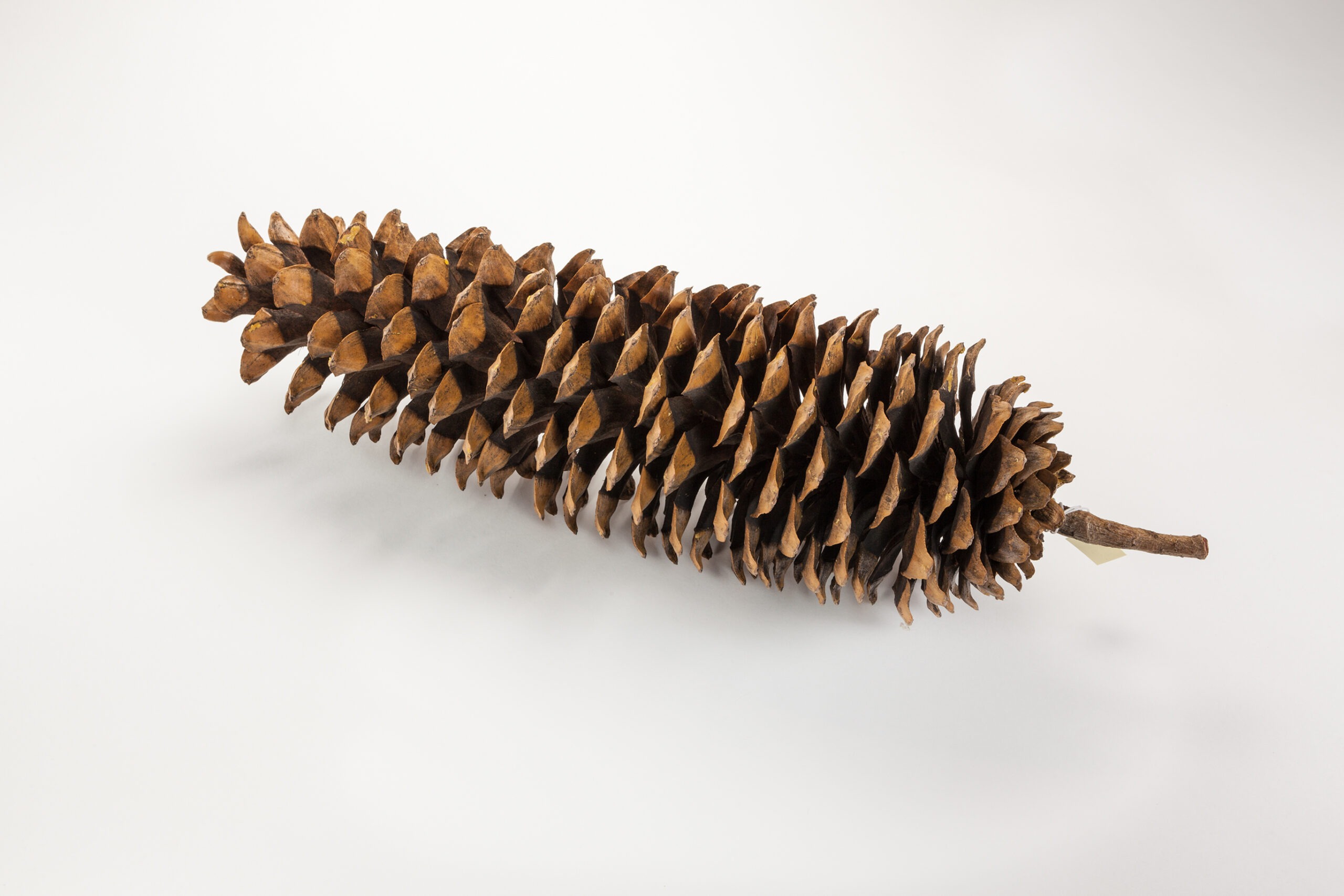
Sugar Pine Cone. This award-winning cone holds the Guinness World Record for its length of 22.9″ (58.2 cm). Photo courtesy of Yosemite Museum, YOSE 241167.
The Association not only built the museum and opened it to the public in 1926, but also developed the concept of nonprofit stewardship on federal lands, and has served as a model for park associations nationwide.
“What began with early Yosemite leaders collecting objects to help people connect more deeply and learn about the park has become a respected and impressive collection of our country’s revered natural and historical resources,” says Laura Bender, Yosemite National Park’s museum curator.
Bender and her team are responsible for the conservation and care of more than 5 million objects in the museum’s collection, including masterpieces of Native basketry, famous landscape paintings and photography, and specimens of Yosemite’s endemic flora and fauna.
These objects can be portkeys to earlier times, helping us understand the perspectives of those who came before us.
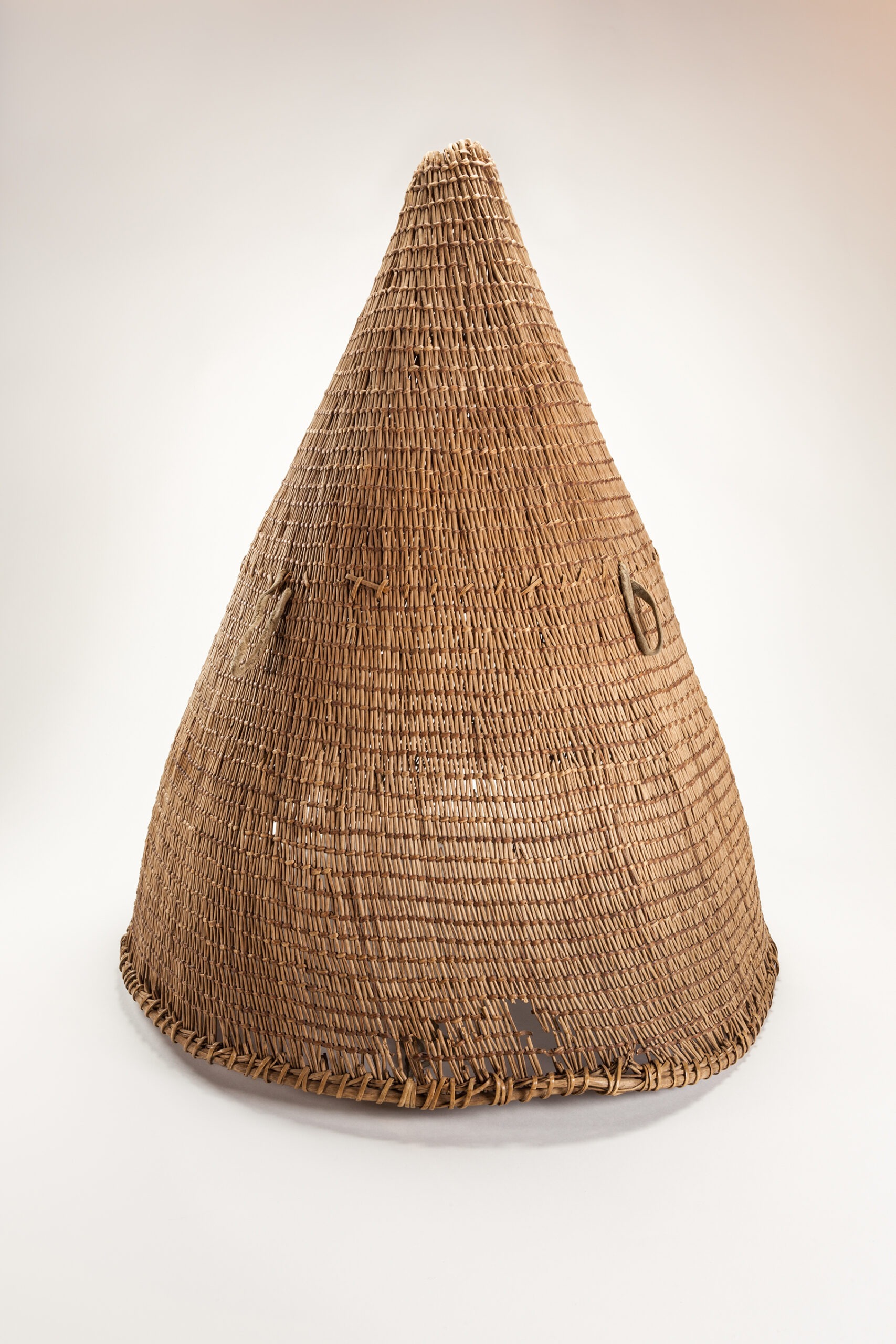
Washoe Burden Basket. Made around 1890 by an unknown artist, this basket was gifted to the park in 1920 and became the first cataloged museum object in the NPS. Photo courtesy of Yosemite Museum, YOSE 1.
Artifacts left behind by Chinese laborers from Wawona show what immigrants carried into the mountains to help them feel at home. Utility baskets, such as burden and cooking baskets, teach us about the cultural practices of local Tribes. A length of string with a note from Galen Clark about the circumference of the Grizzly Giant connects us to early park leaders.
For some visitors, the museum safeguards family heirlooms.
“I’ve seen people brought to tears seeing their family’s history in the museum’s collection, from the brother and sister reliving their great-grandfather’s 1896 bicycle trip to Yosemite Valley by looking at his signature in one of the hotel’s registers, to the mom showing her little boy the buckskin dress on display in the Indian Cultural Exhibit, saying, ‘That was your relative’s dress,’” Bender says.
With the support of Conservancy donors, the Yosemite Museum is celebrating its centennial this year with an exhibit called “A Century of Heritage.” It will be on view in 2026, with details available on the NPS website.
Visitors to the exhibit will learn about the museum’s past, present, and future through a wide range of objects from the museum’s collections. This includes the first object ever cataloged in any museum in the NPS: a basket referred to as YOSE 1 (pictured above), its catalog number. They’ll find prominent art pieces, such as Albert Bierstadt’s 1864 painting, “Night at Valley View,” as well as everyday objects, such as soaproot brushes made by the park’s affiliated Tribal members. Museum staff are also planning a few surprises, incorporating unexpected items that aren’t usually on display.
Together, all these pieces tell a story of Yosemite and reflect the museum’s lasting impact on how people understand and connect to this place.