The NPS will be accepting comments on potential Mist Trail improvements in late spring of 2026. We will update this blog with the exact date and link when it is announced.
If you’ve ever hiked the Mist Trail, you know it’s more than just a path.
It’s the cool rush of spray from Vernal Fall on a warm day. The steady climb up granite steps worn smooth by millions of visitors. Moments of pause to take in the valley below or the domes above. The overwhelming feeling of accomplishment at the end of the hike.
It’s one of Yosemite National Park’s most iconic experiences — and with that, one of the park’s most heavily used trails.
Each summer, an average of 85,000 visitors hike within the Mist Trail Corridor (the area between the trailhead and Little Yosemite Valley — see map below). With heavy foot traffic comes heavy impacts on the landscape, wildlife, and visitors — eroded trails, trampled vegetation, food-habituated wildlife, and a somber history of visitor accidents and fatalities.
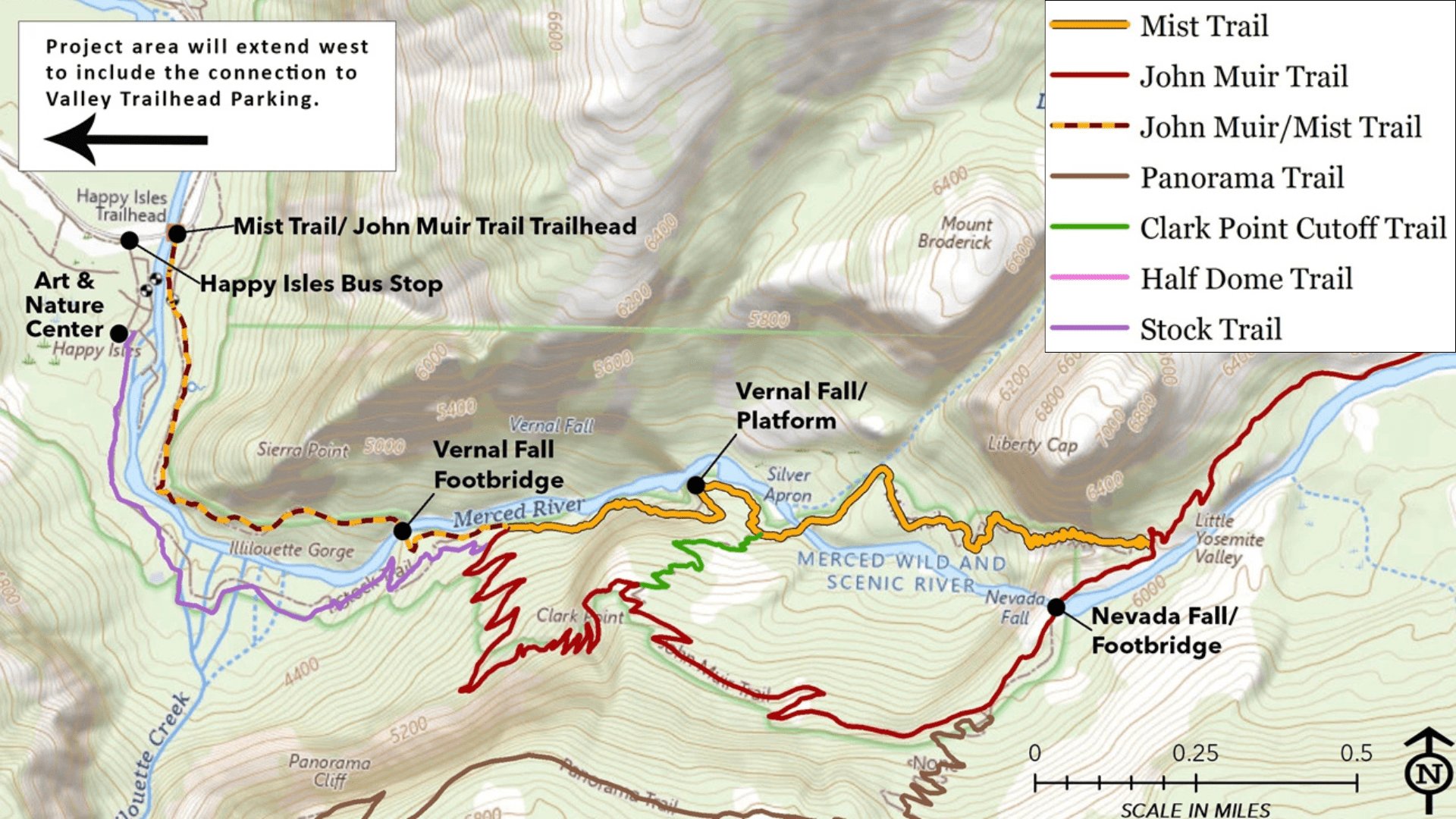
Map showing preliminary Mist Trail Corridor project area and related zones.
Small changes have been implemented in the Corridor over time — stair railing replacements, trail repairs, and preventative search and rescue efforts funded by Yosemite Conservancy — but in a trail corridor that was built when visitation was far lower, a more comprehensive planning effort is needed to address wayfinding, stewardship, visitor services, and visitor safety.
The National Park Service (NPS) is currently focusing efforts on a section of the corridor — from the wilderness parking lot to the top of Nevada Fall — where they hope to address existing management and safety issues.
But how are large-scale improvements implemented on such a popular trail?
The short answer is the National Environmental Policy Act, casually known as NEPA … the long answer can be found by reading this blog:
- What is NEPA? (laws behind changes in Yosemite)
- Why NEPA and your voice matter!
- How to leave a public comment
What Is NEPA?
The National Environmental Policy Act (NEPA) is a federal law passed in 1970 that requires government agencies to carefully assess the environmental impacts of major projects as part of the planning process.
In places like Yosemite, that means that the NPS can’t simply widen or reroute a trail, bulldoze a meadow, implement operational changes, or build new infrastructure without first understanding how those changes might directly affect wildlife, water, landscapes, and the visitor experience. The NEPA process involves a thorough assessment of a project’s environmental impact AND requires public input.
NEPA’s structure is designed to allow Yosemite to evolve to meet modern demands and challenges while continuing to protect and preserve the awe-inspiring landscapes and wildlife that make Yosemite unforgettable.
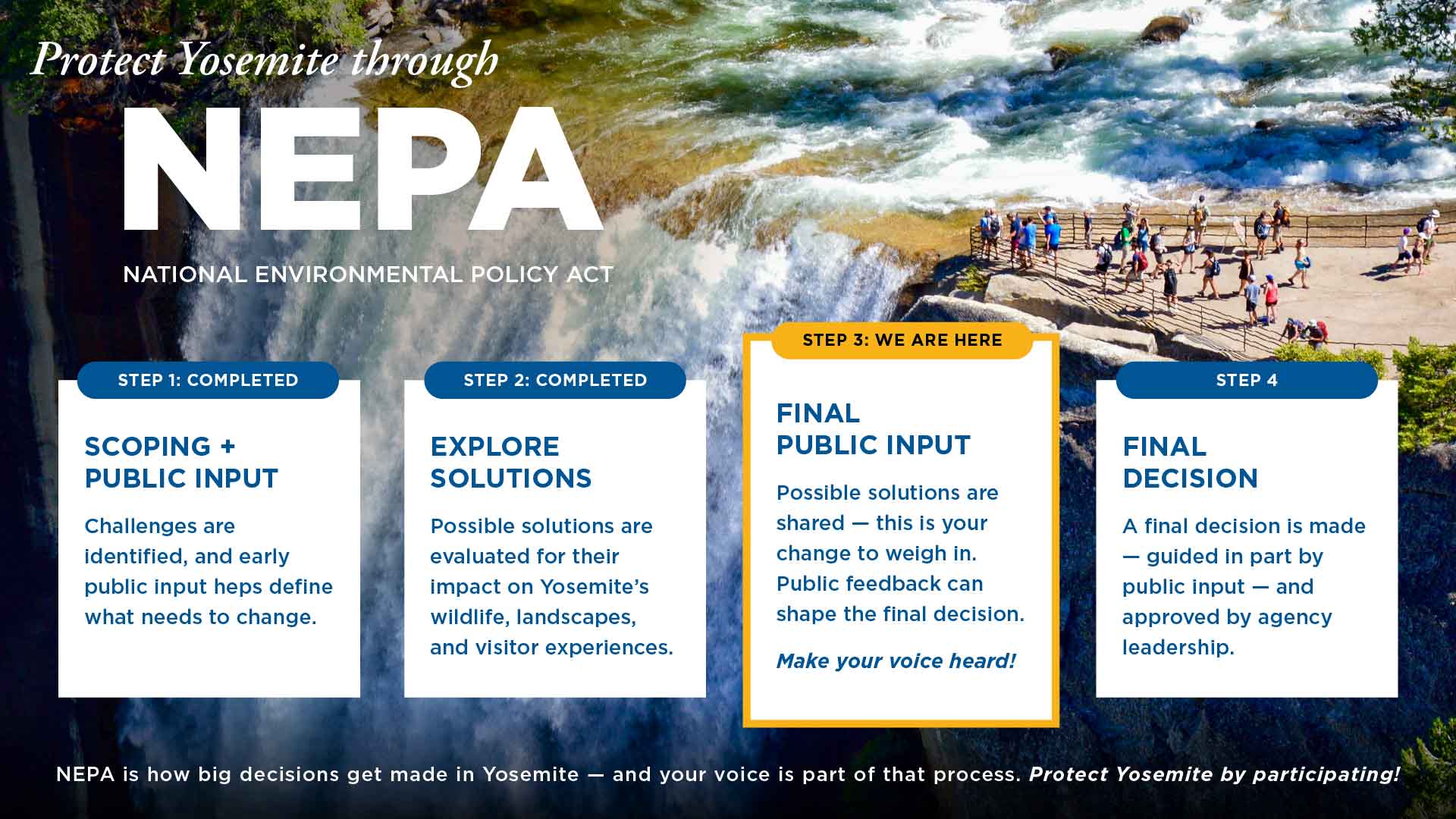
Detailed NEPA process:
Step 1 | Scoping (completed)
Scoping for the Mist Trail Corridor Project took place in Oct. and Nov. of 2024.
The first step in the NEPA process is known as scoping. In this first phase, the NPS shares the problem at hand and some ideas on how to address them. In the case of the Mist Trail project, the NPS plans to address safety and wayfinding concerns in the Mist Trail Corridor project area.
They then ask the public, stakeholders, and other organizations about their thoughts on problems and solutions. Broad questions are asked during this time: What issues are visitors experiencing? Where are the biggest concerns? What should be studied?
This step helps define the project’s scope and ensures that real visitor experiences and concerns shape what comes next.
For the Mist Trail Corridor Project, the scoping step took place from October 24 to November 23, 2024.
Step 2 | Study the Options (completed)
For the Mist Trail Corridor Project, this step took place throughout 2025.
Using public input, NPS staff come to a consensus on the possible solutions (often called “alternatives”) that address the issue of concern while simultaneously protecting park resources. These alternatives are broadly defined, and staff conduct a detailed environmental analysis to assess the potential impact of each solution on local wildlife, landscapes, and visitor experiences.
The alternatives typically include:
• No Action — maintaining current conditions.
• Minimal Changes — small-scale improvements.
• More Significant Changes — larger interventions to address safety, access, or resource impacts.
Each alternative is then evaluated for how it could affect:
• Natural resources (plants, wildlife, water, air quality, night sky, soundscapes, etc.).
• Cultural resources.
• Visitor experience and safety.
This is the technical backbone of the process — where science, data, and planning come together.
Step 3 | Share the Plan (we are here!)
For the Mist Trail Corridor Project, the plan is expected to be shared with the public in the spring of 2026.
Current stage of the Mist Trail Corridor Project!
Next, the NPS analyzes the proposed actions and their potential impacts in either an Environmental Assessment (EA) document or an Environmental Impact Statement (EIS) document. The document created depends on how big or complex the project is — an EA is used for projects expected to have minimal environmental impacts, while an EIS is often reserved for projects with the potential for significant impacts
For the Mist Trail Corridor Project, which centers on improving safety and wayfinding within an existing trail system, the NPS will publish an EA. This document will highlight the potential impacts of each of the possible alternatives and identify a preferred path forward.
THIS is where you come in!
Once the EA is published, the NPS opens a formal comment period during which the public can provide specific, informed feedback on the EA and possible solutions. Remember, while you may think your voice doesn’t matter, thoughtful public feedback really does! Under NEPA, the NPS is legally required to consider public input. This means that public input — your input — is more than a formality; it can directly shape the final project outcome.
If you’ve hiked this corridor and if you care about its future, this is your opportunity to weigh in.
The NPS will be accepting comments on potential Mist Trail improvements in late spring of 2026. We will update this blog with the exact date and link when it is announced.
Step 4 | Make it Official
This final step of the Mist Trail Corridor Project NEPA process is expected to occur by 2027.
After the comment period closes, the NPS reviews and considers all substantive public input. The NPS will even conduct further analysis at this point if necessary.
Based on public input and, in the case of the Mist Trail Corridor Project, the EA, the NPS selects a solution and submits documentation that explains the decision, the alternatives considered, and future project plans. If the selected plan is determined to not have significant environmental impacts, the agency issues a Finding of No Significant Impact (FONSI).
This finalized decision is reviewed and approved by the regional NPS director before implementing the selected action.
Why NEPA & Your Voice Matter!
What do you and NEPA have in common? The power to shape what comes next in the Mist Trail Corridor!
The Mist Trail Corridor Project is now entering one of the most important stages in the NEPA process: the public comment period (stage 3). In the next month or so, the NPS will share their findings from the environmental assessment, along with their proposed improvements to the Mist Trail corridor.
At this time, they will also open the floor for public feedback. You’ll be able to:
- Review the proposed plans.
- Explore a visual Story Map explaining the project.
- Submit your comments directly to the National Park Service.
Participating in the public comment process is one more way to support Yosemite. Input from people who know and love Yosemite — have walked these trails, supported the park, and care about its future — is one of the best ways to shape better outcomes in Yosemite.
The NPS will be accepting comments on potential Mist Trail improvements in late spring of 2026. We will update this blog with the exact date and link when it is announced.
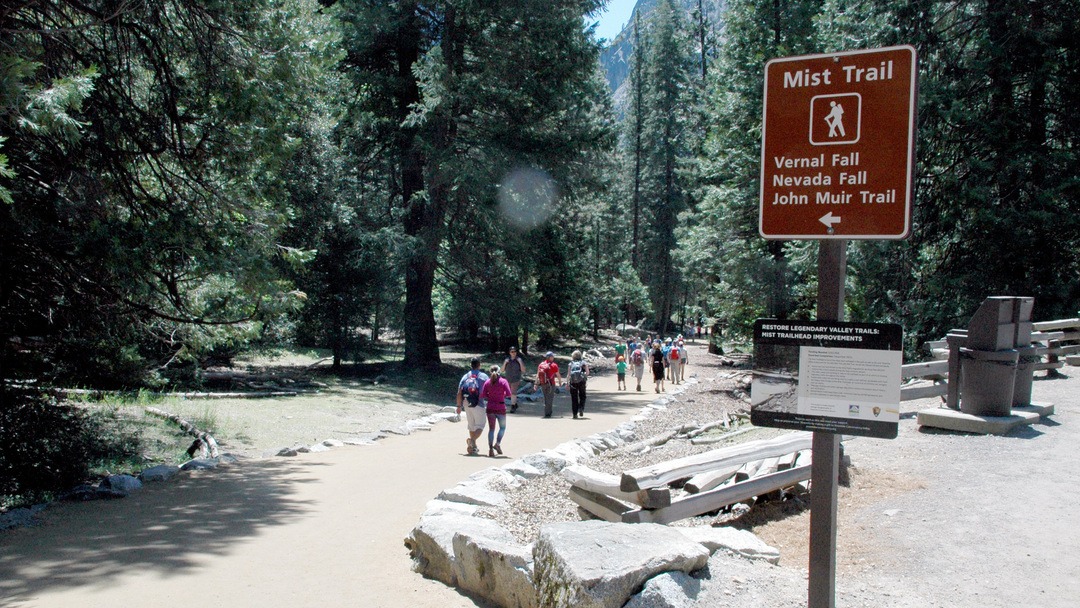
Improvements to the Mist Trail trailhead are one of the many items that the public can submit comments on. Photo courtesy Ryan Kelly.
The Ins & Outs of Public Comments
The NPS will be accepting comments on potential Mist Trail improvements in late spring of 2026. We will update this blog with the exact date and link when it is announced. In the meantime, read below to learn how you can leave the most helpful comment.
Helpful comments WILL:
- Be submitted after reading the full management plan.
- Address the purpose and need for action.
- Discuss environmental issues analyzed in the report.
- Include your opinions on the alternatives, including mitigation measures that could reduce potentially harmful effects.
Helpful comments NOT:
- Be submitted more than once. The comment period is not a vote, and duplicative comments will not impact decision-making.
- Discuss topics outside of the Mist Trail Corridor Project and the alternatives.
Once the public comment period opens, we will upload this section of the blog with detailed instructions on how to leave a comment online.
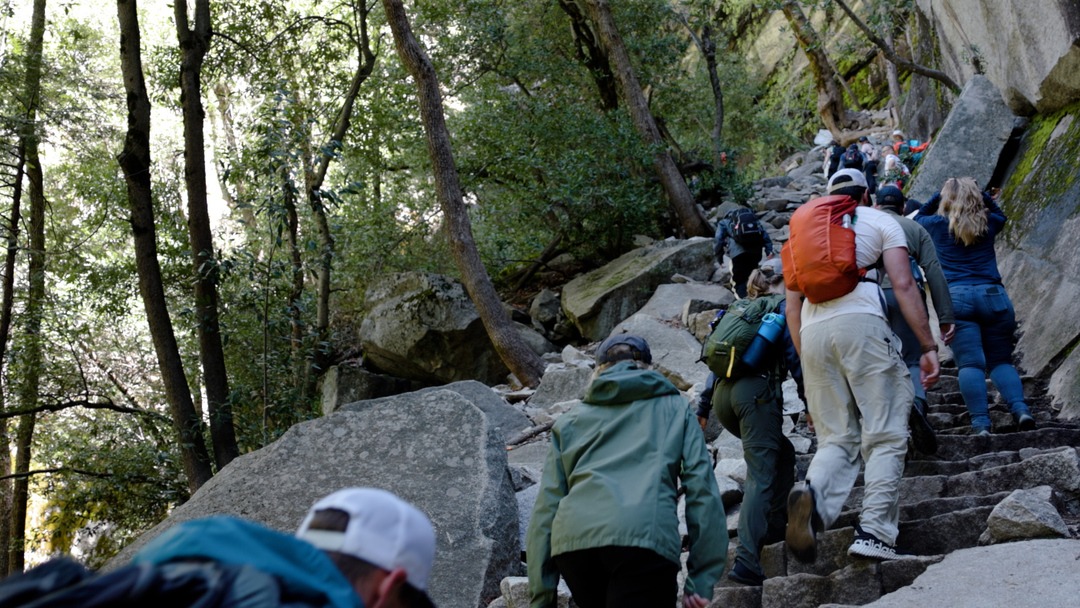
A steady stream of visitors hike the iconic Mist Trail steps. Photo courtesy of Sabrina Claros.
A Process Shaped by People
The NEPA process can take time. It asks for detailed research, public input, and careful decision-making before any changes are made — and that diligent process is what ultimately protects our public lands.
The Mist Trail Corridor that you experience today is the result of decades of thoughtful planning and stewardship. For this reason, the decisions being considered now will shape how these trails are experienced for years to come.
By taking the time to participate, you’re helping ensure that future generations can experience the same sense of awe — the spray of Vernal Fall, the climb up granite steps, the views that make the effort worthwhile — in the safest and most enjoyable way possible.
The future of Yosemite National Park is shaped by those who speak up — don’t miss your chance to be one of them. Check back over the next couple of months to see if the public comment submission form has opened!